

.jpg) |
|
| A South African Air Force Cheetah | |
| Role | Fighter aircraft |
|---|---|
| National origin | South Africa |
| Manufacturer | Atlas Aircraft Corporation |
| Introduction | 1986 |
| Status | Active with the Ecuadorian Air Force |
| Primary users | South African Air Force (historical) Chilean Air Force (historical) Ecuadorian Air Force |
| Number built | 38 (C), 16 (D), 16 (E) |
| Developed from | Dassault Mirage III IAI Nesher IAI Kfir |

The Atlas Cheetah is a South African fighter aircraft designed and produced by the aviation company Atlas Aircraft Corporation (later Denel Aeronautics). It was developed at the behest of, and principally operated by, the South African Air Force (SAAF)..
.jpg)

The Atlas Cheetah programme originated during the 1980s out of South Africa's requirement for more capable fighter and strike aircraft. At the time, the South African Air Force (SAAF) was confronted by the need for more advanced aircraft to attain an edge over the ever-more sophisticated Soviet-built aircraft, such as the MiG-23, that were being supplied to both Angolan and Cuban forces. These aircraft were being deployed against South Africa's own military during the lengthy conflict commonly known as the Border War.[3] Furthermore, the increasing cost of maintenance due to international sanctions and the increasing age of existing aircraft in the SAAF's inventory also needed to be addressed. As a consequence of the arms embargo being imposed at the time under United Nations Security Council Resolution 418, South Africa was prevented from purchasing new aircraft from almost any other country in the world; accordingly, the upgrading of existing aircraft became the only viable option available

Ceiling
MAX RANGE
Aircraft Speed
Max Crew
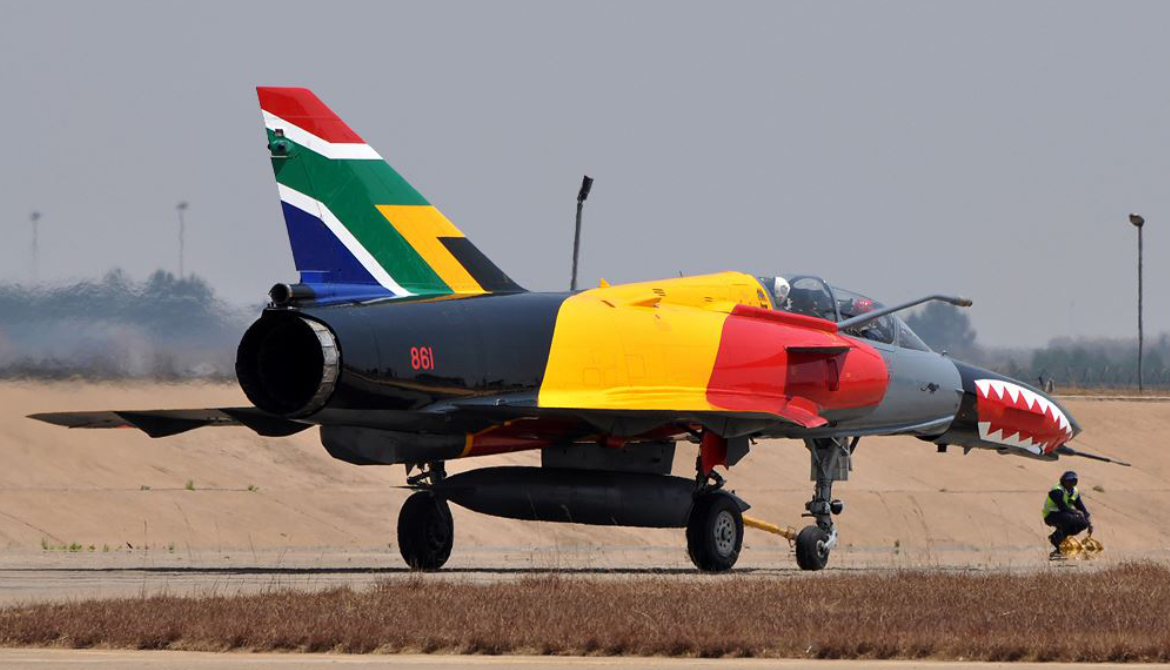





The Cheetah C was the final development in the Cheetah series and was the only fighter aircraft in service with the SAAF until replaced by the Swedish-built Saab JAS 39 Gripen during 2008.[In addition to the upgrades described above, the Cheetah C incorporated more sophisticated avionics and navigation suite and an improved pulse-doppler multi-mode radar (ELTA). The aircraft was also fitted with a data link and updated versions of the helmet-mounted sight, HUD and improved HOTAS controls

The Falcon 6X was rolled-out on 8 December 2020.[23] The initial flight was on 10 March 2021

The upgrade consisted of a complete refurbishment of the airframe down to zero flight hours condition;





.svg.png)