Dornier Flugzeugwerke
Dornier Do 24 Flying Boat
First flight 3 July 1937
Introduction November 1937 Produced 1937–1945


Dornier Flugzeugwerke. Do 24 Flying Boat
 |
|
| General information | |
|---|---|
| Type | Bomber, reconnaissance and air-sea rescue flying boat |
| National origin | Nazi Germany |
| Manufacturer | Dornier Flugzeugwerke |
| Built by | Aviolanda SNCAN |
| Primary users | LuftwaffeNetherlands Naval Aviation Service |
| Number built | 279 |
| History | |
| Manufactured | 1937–1945 |
| Introduction date | November 1937 |
| First flight | 3 July 1937 |
| Retired | 1967 (Spanish Air Force) |
.
History Dornier Flugzeugwerke.
Dornier Do 24 Flying Boat
First flight 3 July 1937
Introduction November 1937
Produced 1937–1945

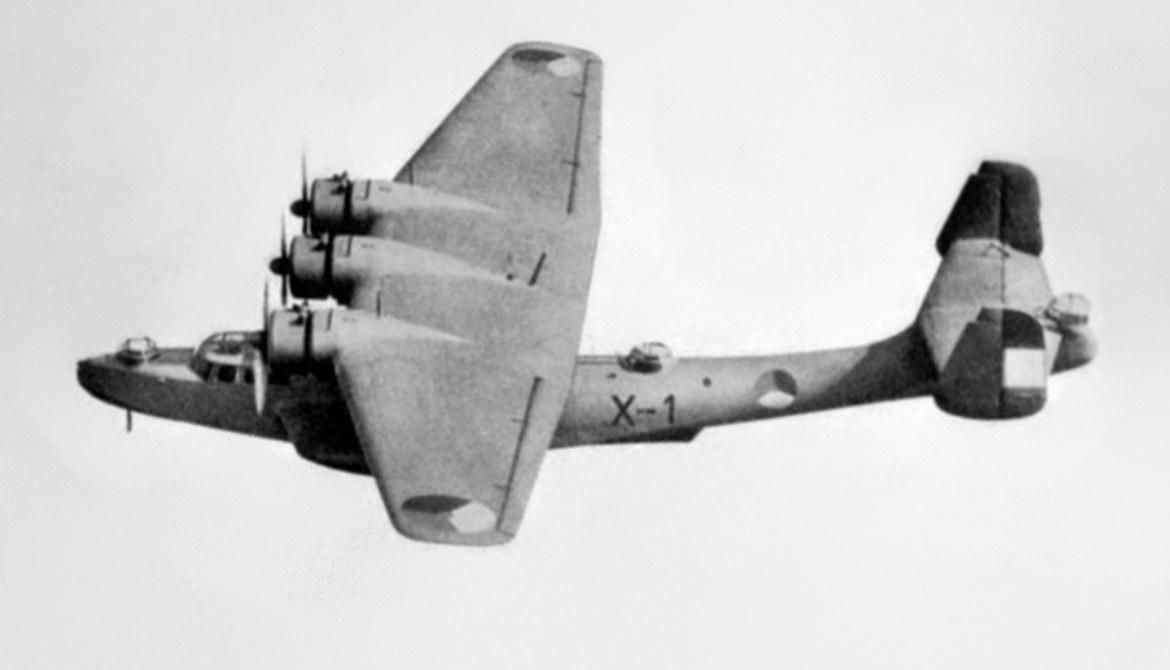
The Dornier Do 24 is a 1930s German three-engine flying boat designed by the Dornier Flugzeugwerke for maritime patrol and search and rescue. A total of 279 were built among several factories from 1937 to 1945.
The Do 24 was an all-metal parasol monoplane with a broad-beamed hull and stabilising sponsons. Twin tails were mounted on the upswept rear of the hull, while three wing-mounted tractor configuration engines powered the aircraft. Fuel was carried in tanks in the sponsons and the wing centre section. Up to 1,200 kg (2,600 lb) of bombs could be carried under the aircraft's wings, while defensive armament consisted of three gun turrets, one each in nose, dorsal and tail positions. In early aircraft the turrets were each fitted with a machine gun but later aircraft carried a 20 mm cannon in the dorsal turret.
Operational history
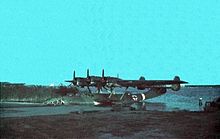
Luftwaffe Do 24 in Romania, 1941 
Restored Do 24 ATT re-engined with Pratt & Whitney PT6A-45 turboprop engines
The aircraft captured and produced in the Netherlands were pressed into service with Seenotstaffeln and deployed in the Arctic, Baltic, North Sea, Bay of Biscay, Mediterranean, and Black Sea. They were also used as transports, notably for keeping contact with the troops left behind on the Aegean Islands and Crete, and for supporting the Kuban bridgehead in early 1943.
Netherlands
Thirty-seven Dutch- and German-built Do 24s had been sent to the East Indies by the time of the German occupation of the Netherlands in June 1940. Until the outbreak of war, these aircraft would have flown the tri-color roundel. Later, to avoid confusion with British or French roundels, Dutch aircraft flew a black-bordered orange triangle insignia.
A Dutch Dornier Do 24 is credited with sinking the Japanese destroyer Shinonome on December 17, 1941 while the ship was escorting an invasion fleet to Miri in British Borneo.[7] After the Japanese invasion of the Netherlands East Indies, six surviving Do 24s were transferred to the Royal Australian Air Force in February 1942. They served in the RAAF through most of 1944 as transports in New Guinea.


0
KmCeiling
0
KmCombat RANGE
0
Km/hAircraft Speed
0
Max Crew
Photo Gallery
Dornier Flugzeugwerke.
Dornier Do 24 Flying Boat


Dornier Flugzeugwerke
Dornier DO-24 Flying Boat
General Info
-
-
- Crew: 4 or 6
- Length: 22.05 m (72 ft 4 in)
- Wingspan: 27 m (88 ft 7 in)
- Height: 5.75 m (18 ft 10 in)
- Wing area: 108 m2 (1,160 sq ft)
-
Powerplant
-
-
- Empty weight: 9,400 kg
- Gross weight: 13,700 kg
- Max takeoff weight: 18,400 kg
- Fuel capacity: 5,300 L (1,400 US gal; 1,200 imp gal) in two 1,000 L (260 US gal; 220 imp gal) wing tanks and twelve small tanks in the sponsons
- Powerplant: 3 × Bramo 323R-2 Fafnir 9-cylinder air-cooled radial piston engine, 704 kW (944 hp) each
-

Performance
- Maximum speed: 330 km/h (210 mph, 180 kn) at 2,600 m (8,500 ft)
-
-
- 290 km/h (180 mph; 160 kn) at sea level
-
- Cruise speed: 295 km/h (183 mph, 159 kn) at 2,600 m (8,500 ft) (maximum continuous)
- Range: 2,900 km (1,800 mi,
- Ferry range: 4,700 km
- Service ceiling: 7,500 m
Armament
-
- Guns:
- 1 × 20 mm (0.787 in) Hispano HS.404 or MG151 autocannon in dorsal turret
- 1 × 7.92 mm (0.312 in) MG 15 machine gun in nose turret
- 1 × 7.92 mm (0.312 in) MG 15 machine gun in tail gun position
- Bombs: 1,200 kg (2,600 lb), under the wings
- Guns:
Links to Youtube & Others
Thirty-seven Dutch- and German-built Do 24s had been sent to the East Indies by the time of the German occupation of the Netherlands in June 1940. Until the outbreak of war, these aircraft would have flown the tri-color roundel.

Dornier Flugzeugwerke.
Dornier Do 24 Flying Boat
A Dutch Dornier Do 24 is credited with sinking the Japanese destroyer Shinonome on December 17, 1941.

Youtube Link
On 31 October 1944, a German Do 24 (CM+RY of Seenotgruppe 81) made a forced landing in neutral Sweden, was impounded and eventually bought, and remained in Swedish service until 1952.

Read more in Fairchild Aviation Corporation. Originally known as the Seversky Aircraft Company