
Top
about
element
General Info

Embraer
EMB-110 Bandeirante

General information
Type Turboprop regional airliner

National origin Brazil
Manufacturer Embraer
Designer Max Holste
First flight 26 October 1968
Introduction 16 April 1973
Status Active
Primary users Brazilian Air Force Wiggins AirwaysProduced 1968–1990
Number built 503

.
History Embraer S.A. Brazilian multinational aerospace.  
Embraer EMB-110 Bandeirante
First flight 26 October 1968 Introduction 16 April 1973


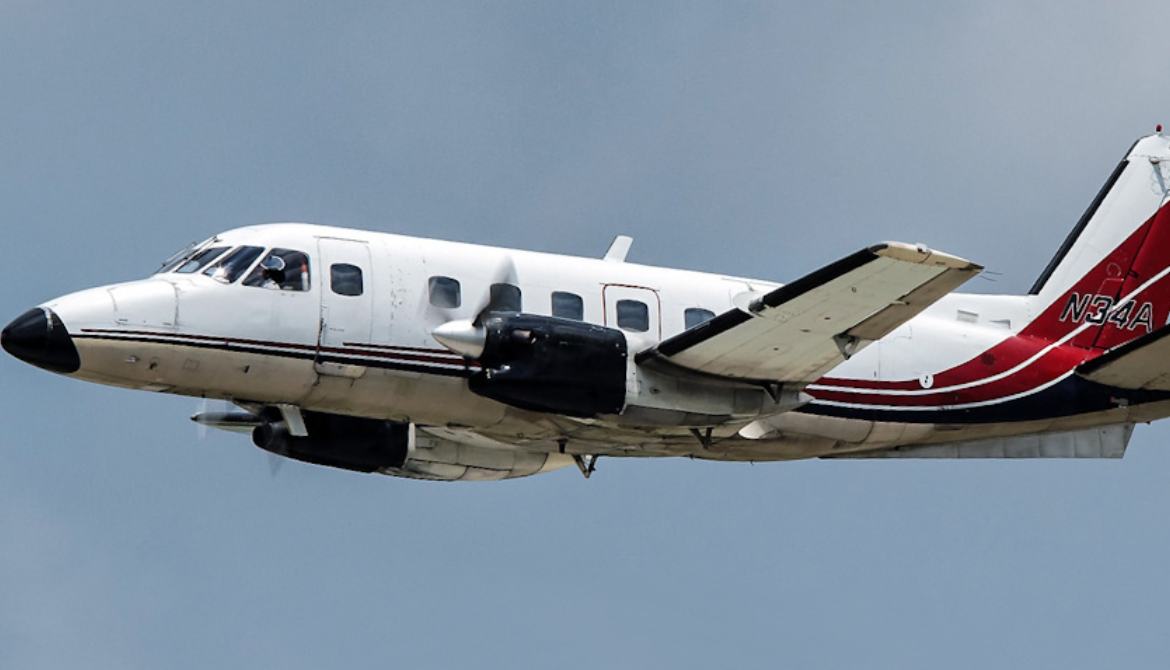
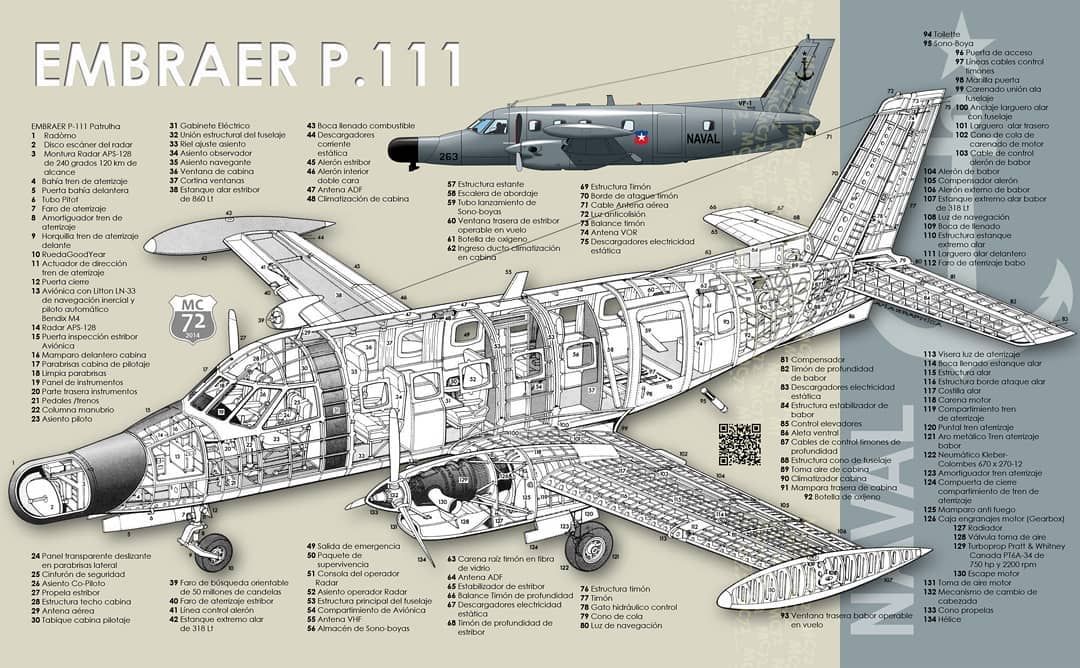
The Embraer EMB 110 Bandeirante (English: pioneer) is a Brazilian twin-turboprop light transport aircraft designed by Embraer for military and civil use.

The EMB 110 was designed by the French engineer Max Holste; it had been designed in line with specifications issued by the Brazilian Ministry of Aeronautics in 1965.[3] The goal was to create a general purpose aircraft, suitable for both civilian and military roles with a low operational cost and high reliability. On 26 October 1968, the YV-95 prototype performed its maiden flight; an additional two EMB 110 development aircraft would follow along with an initial order for 80 transport aircraft for the Brazilian Air Force in the following year. Type certification was received from the Brazilian aviation authorities in late 1972, permitting its entry to service in April 1973 with the Brazilian airline company Transbrasil.

Design and development

YC-95 first prototype (EMB-100) in Aerospace Museum, Rio de Janeiro
The origins of the EMB 110 Bandeirante can be traced back to the issuing of a directive by the Brazilian Ministry of Aeronautics in 1965; this called for the production of a transport aircraft for both civilian and military operations that would be reliable and possess low operating costs. It was to be equipped with turboprop engines, a low-mounted wing, and have sufficient capacity to accommodate eight personnel; these stipulations had been drawn from a study of Brazilian commercial air traffic, and aimed to produce an aircraft that would be well suited to the existing airport infrastructure of the country at that time. The resulting specification that had been generated under the IPD-6504 programme would greatly shape the future aircraf

0

Km

Ceiling

0

Km

MAX RANGE

0

Km/H

Aircraft Speed

0

Max Crew

element
element
Embraer S.A. Brazilian multinational aerospace

Embraer S.A. Brazilian multinational aerospaceEmbraer EMB-110 Bandeirante

1

General Info

  • Crew: 2
  • Capacity: 18 passengers
  • Length: 15.1 m (49 ft 6 in)
  • Wingspan: 15.33 m (50 ft 4 in)
  • Height: 4.92 m (16 ft 2 in)
  • Wing area: 29.1 m2 (313 sq ft)
2

Powerplant

  • Empty weight: 3,590 kg (7,915 lb) empty equipped - passengers
  • 3,393 kg (7,480 lb) empty equipped - cargo
    • Max takeoff weight: 5,900 kg 
    • Fuel capacity: 1,308 kg (2,884 lb) / 1,720 L (450 US gal; 380 imp gal) in four integral wing tanks
    • Powerplant: 2 × Pratt & Whitney Canada PT6A-34 turboprop engines, 559 kW (750 hp) each
plane
3

Specifications

  • Cruise speed: 411 km/h (255 mph, 222 kn) maximum at 2,440 m (8,005 ft)
  • Economical cruise speed: 341 km/h (212 mph; 184 kn) at 3,050 m (10,007 ft)
  • Range: 1,964 km (1,220 mi, 1,060 nmi) econ. cruise + 45 min reserve
  • Service ceiling: 6,550 m (21,490 ft)
  • Rate of climb: 8.333 m/s (1,640.4 ft/min)
  • 1.8833 m/s (6 ft/s) on single engine
    • Take-off run: 807 m (2,648 ft) (FAR23.135 / SFAR 41A)
    • Landing run: 868 m (2,848 ft) at MLW
  • )
Special Links Embraer EMB-110 Bandeirante

Links to Youtube & Others

Last operational G-II, retired in 2006, at the Museo Nacional de Aeronáutica de Argentina ("National Aeronautics Museum".

Embraer EMB-110 Bandeirante

The Sikorsky CH-53K King Stallion (Sikorsky S-95) is a heavy-lift cargo helicopter
interior

Youtube Link

he Sikorsky CH-53K King Stallion (Sikorsky S-95) is a heavy-lift cargo helicopter
interior
Aircrafttotal : Embraer S.A. Brazilian multinational aerospace

Read more in Embraer

brand
brand
brand
brand
brand