


_PS-AEF.jpg)
|
|
| Role | Regional jet Narrow-body airliner |
|---|---|
| National origin | Brazil |
| Manufacturer | Embraer |
| First flight | 23 May 2016 |
| Introduction | 24 April 2018 with Widerøe |
| Status | In service |
| Primary users | Porter Airlines Azul Brazilian Airlines KLM Cityhopper Helvetic Airways |
| Produced | 2016–present |
| Number built | 123 |
| Developed from | Embraer E-Jet family |

| This section needs to be updated. Please help update this article to reflect recent events or newly available information. (August 2022) |
.jpg)
Inspired by the automotive industry's production of multiple models on the same line, Embraer proposed building the E190/195-E2 alongside the original E175/190/195 at a steady rate of eight aircraft per month by the end of 2018. Production of the original E-Jet family was projected to slow if assembly of the E175-E2 had started in 2021.[23] As Embraer transitioned from its previous E-jets to the upgraded E2, it was expecting to deliver 85-95 airliners in 2018 with a negative $150 million free cash flow, less than in 2017 with 78 deliveries in the first nine months with a cash outflow of $700 million: return to profitability will take at least three years once the program investment is reduced and the production ramp up is complete.[24] Hybrid stations capable of work on either the E1 or E2 were more automated, moving to 90% automated drilling and riveting for the E2 wing
.jpg)
.jpg)
Ceiling
Range
Aircraft Speed
Max Crew


| Flight crew | 2 pilots | |||
|---|---|---|---|---|
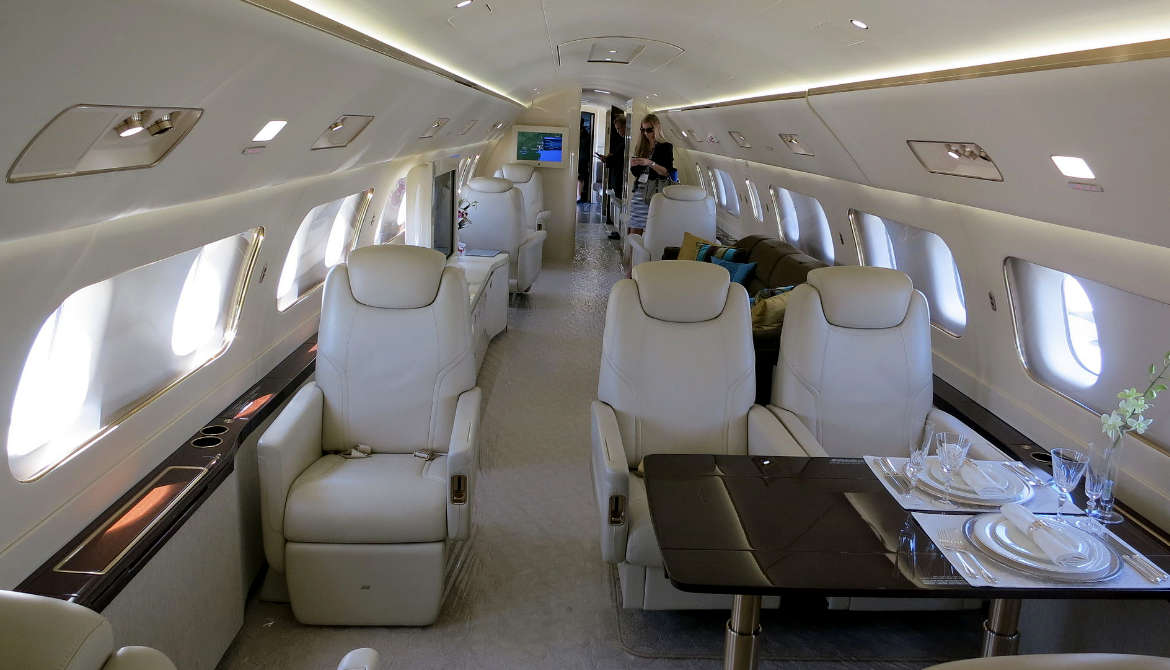
| Cabin | E170 | |||
| Single-class seats | 72@32" - 78@30-33" | |||
| Dual-class seats | 66 (6F@40", 60Y@32") | |||
| Height × width | 2.00 m × 2.74 m (6 ft 7 in × 9 ft 0 in) | |||
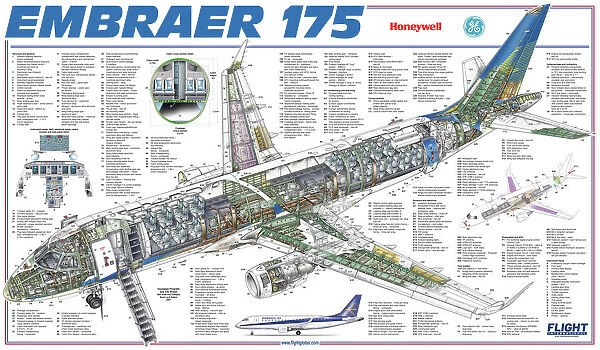
| Dimensions | E170 | |||
| Length | 29.90 m (98 ft 1 in) | |||
| Wingspan | 26.01 m (84 ft 4 in) (E170/E75S) / 28.65 m (94 ft) (E75L) | |||
| Powerplant | E170 / E175 | |||
|---|---|---|---|---|
| Turbofans (2×) | GE CF34-8E | |||
| Thrust | 14,200 lbf (63 kN) | |||
| Performance | E170 | |||
|---|---|---|---|---|
| Max. speed | Mach .82 (470 kn; 871 km/h; 541 mph) @ 41,000 ft (12,000 m) | |||
| Cruise | Mach .75 (430 kn; 797 km/h; 495 mph) | |||
| Range | 2,150 nmi (3,982 km; 2,470 mi) | |||
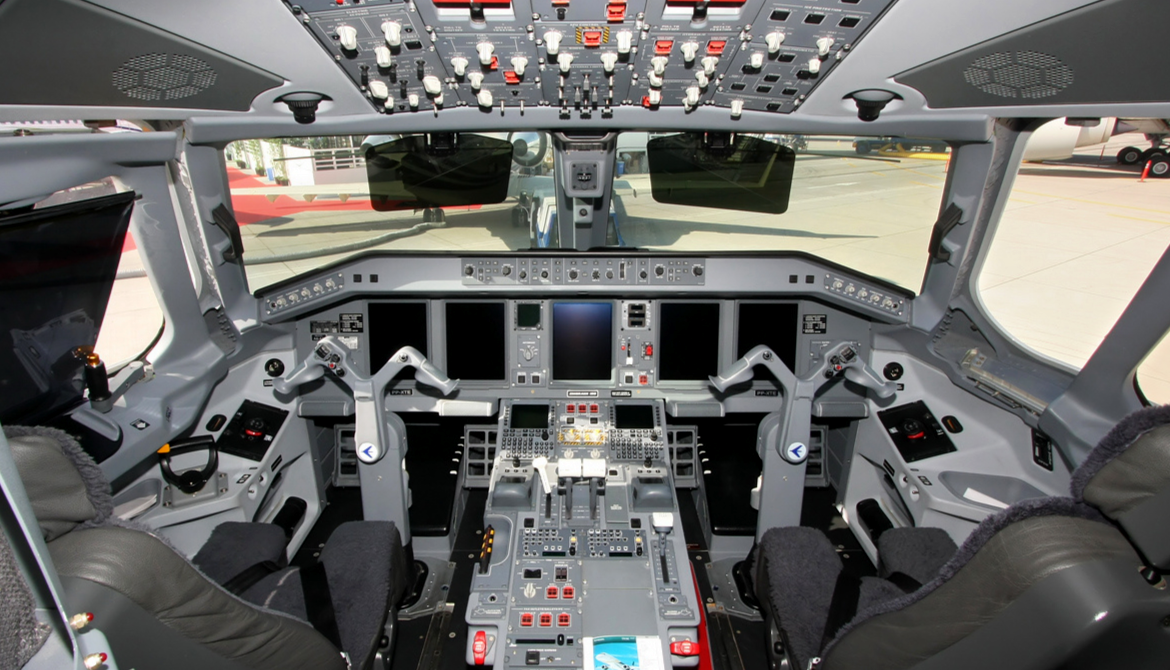
Honeywell Primus Epic
In February 2016, Embraer announced that it had decided to increase the E195-E2's wingspan by 1.4 m (4.6 ft) for greater lift, along with a MTOW increase of 2 t (4,400 lb) to extend its range by 450 nmi (830 km) at sea-level starts, and 250 nmi (460 km) in hot and high conditions. It competes with the Airbus A220-300,[78] at a lower unit cost. As well, Embraer claims E195 trip costs are 22% lower than a 154-seat A320neo and 24% below a 160-seat 737-8 - but airlines install more seats, widening seat costs further apart than the 6% and 8% quoted by Embraer.

The E195-E2 (EMB 190-400) is extended by three seat rows from the E195 by 2.85 m (9.4 ft) in length, and accommodates up to 146 seats
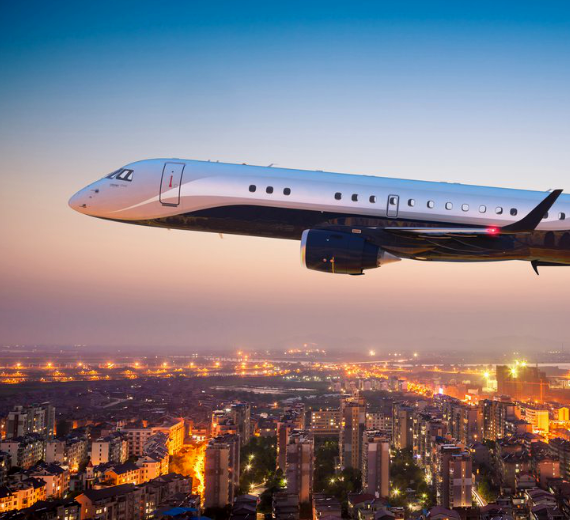
On 19 February 2002, the first prototype performed its maiden flight, marking the beginning of a multi-year flight test campaign involving a total of six prototypes




.svg.png)