Cantieri Aeronautici e Navali,
CANT Z.501 Gabbiano
First flight 7 February 1934
Produced -1943

Panavia GmbH
CANT Z.501 Gabbiano
 |
|
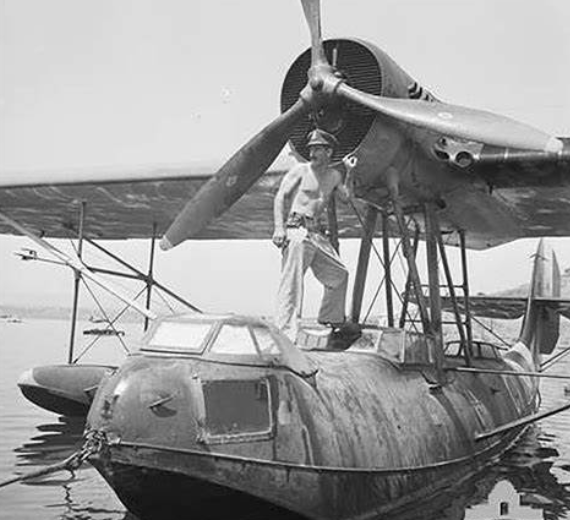
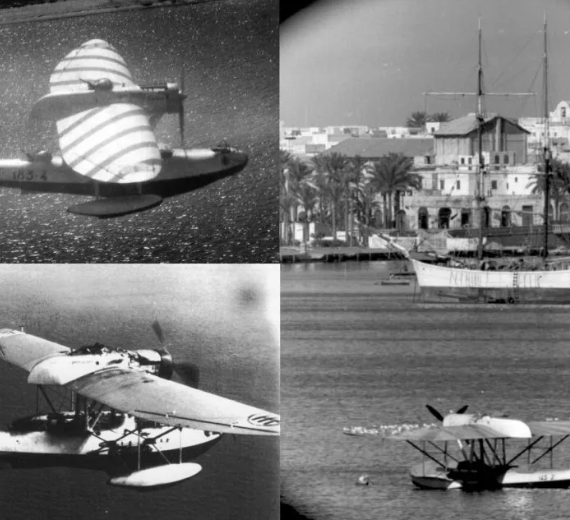
| CANT Z.501 with beaching gear. The position in the nose is closed and the pilot's cockpit is just under the propeller. The engine nacelle was also used as a machine gun position. | |
| Role | Patrol aircraft |
|---|---|
| Manufacturer | CANT |
| Designer | Filippo Zappata |
| First flight | 7 February 1934 |
| Retired | 1950 |
| Primary users | Regia Aeronautica Aeronautica Nazionale Repubblicana Italian Co-Belligerent Air Force Aeronautica Militare Italiana |
| Produced | -1943 |
| Number built | 454 |
.
History Cantieri Aeronautici e Navali Triestini,
CANT Z.501 Gabbiano
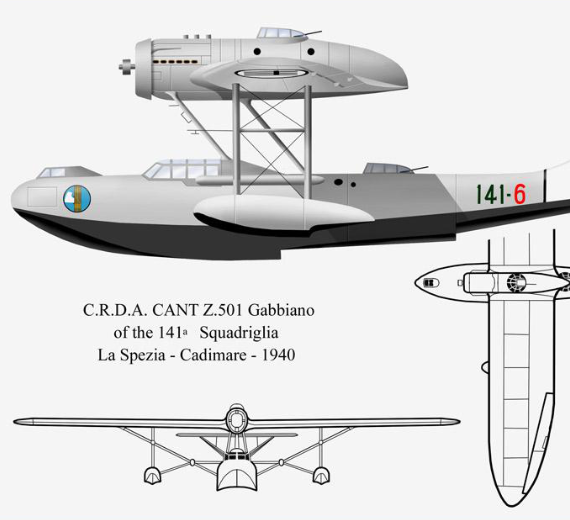
The CANT Z.501 Gabbiano (Italian: Gull) was a high-wing central-hull flying boat, with two outboard floats. It was powered by an engine installed in the middle of the main-plane and had a crew of 4–5 men. It served with the Italian Regia Aeronautica during World War II, as a reconnaissance aeroplane. During its debut in 1934, it set a world distance record. It was obsolete by 1940, but was still used throughout the Second World War, suffering many losses. A few remained in service until 1949
Filippo Zappata was one of the foremost Italian aircraft designers. He worked for Cantieri Aeronautici e Navali Triestini (CANT) for some years, but went to France in 1927 to work for Blériot. He returned to Italy at the prompting of Italo Balbo and resumed work at CANT on a series of new aircraft. The first of these was the Z.501, designed to replace the Savoia-Marchetti S.78. The prototype Z.501 was first flown in 1934 by test pilot Mario Stoppani..
Design

The aircraft had a very slim fuselage, a high parasol wing and a wing-mounted engine nacelle. In the prototype a 560 kW (750 hp) inline Isotta Fraschini Asso-750.RC engine was fitted, with an annular (circular) radiator that made the installation resemble a radial engine, although it was liquid-cooled. Some versions of other planes such as the Ju 88 and Fw 190D had this same feature. The engine nacelle was extended to carry a rear-facing machine gun and other guns were mounted in the centre fuselage and nose. All were 7.7 mm (0.30 in) Breda-SAFAT machine guns. Bombs up to 640 kg (1,410 lb) [4 × 160 kg (350 lb)] were carried under the wings. The aerodynamic low-drag design was typical of Zappata-designed aircraft, as was the wooden construction. Production of the Z.501 began in 1935 with 24 aircraft ordered from CANT and thirty from Aeronautica Sicula, a company in Palermo. Registration numbers started with MM.35168

Operators
- Regia Aeronautica
- Aviazione Legionaria operated 9 aircraft
- Italian Co-Belligerent Air Force
- Aeronautica Nazionale Repubblicana
- Italian Air Force operated few aircraft until 1948
- Royal Romanian Naval Aviation (12 purchased in 1941)


0
KmCeiling
0
KmCombat RANGE
0
Km.hAircraft Speed
0
Max Crew
Photo Gallery
Cantieri Aeronautici e Navali Triestini,
CANT Z.501 Gabbiano
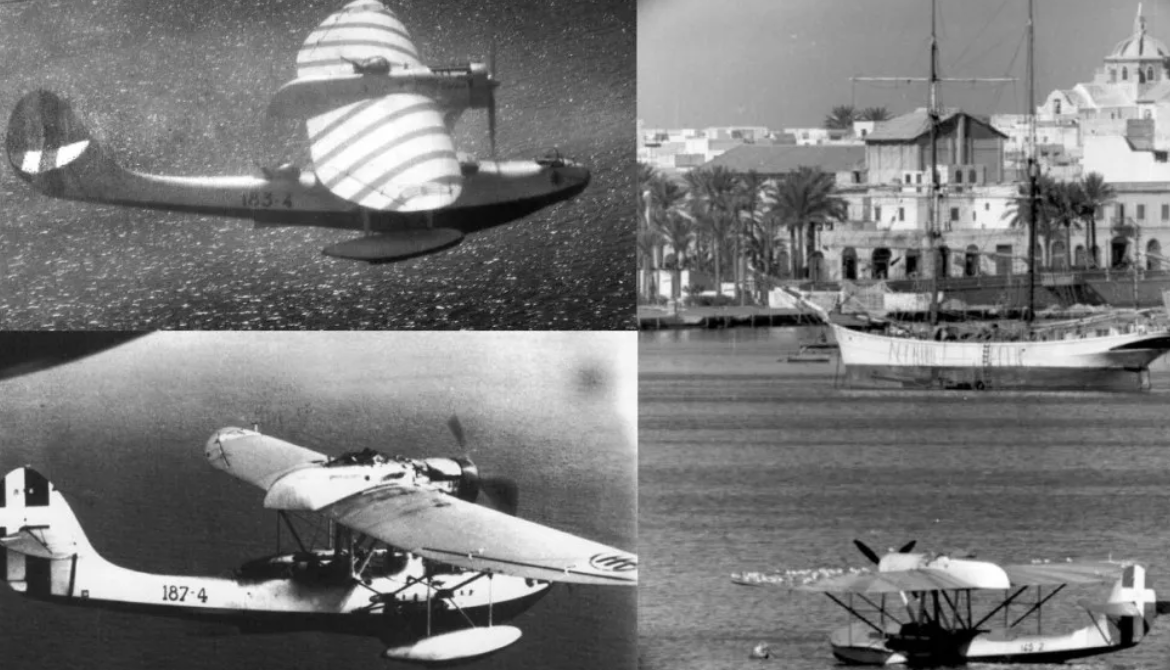
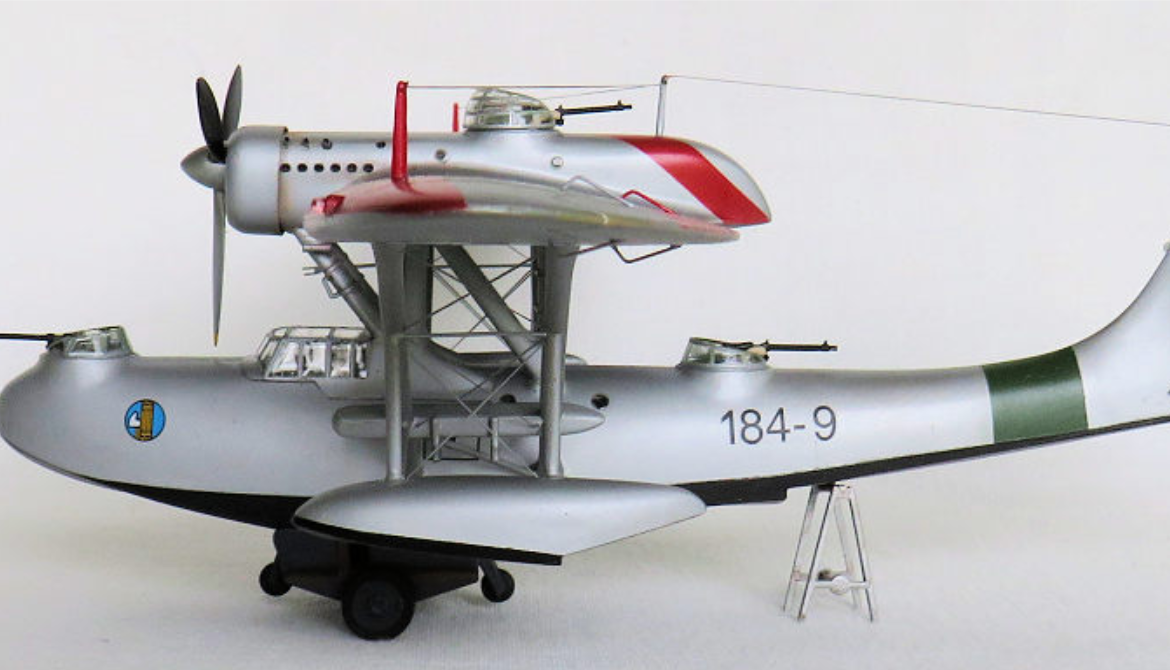
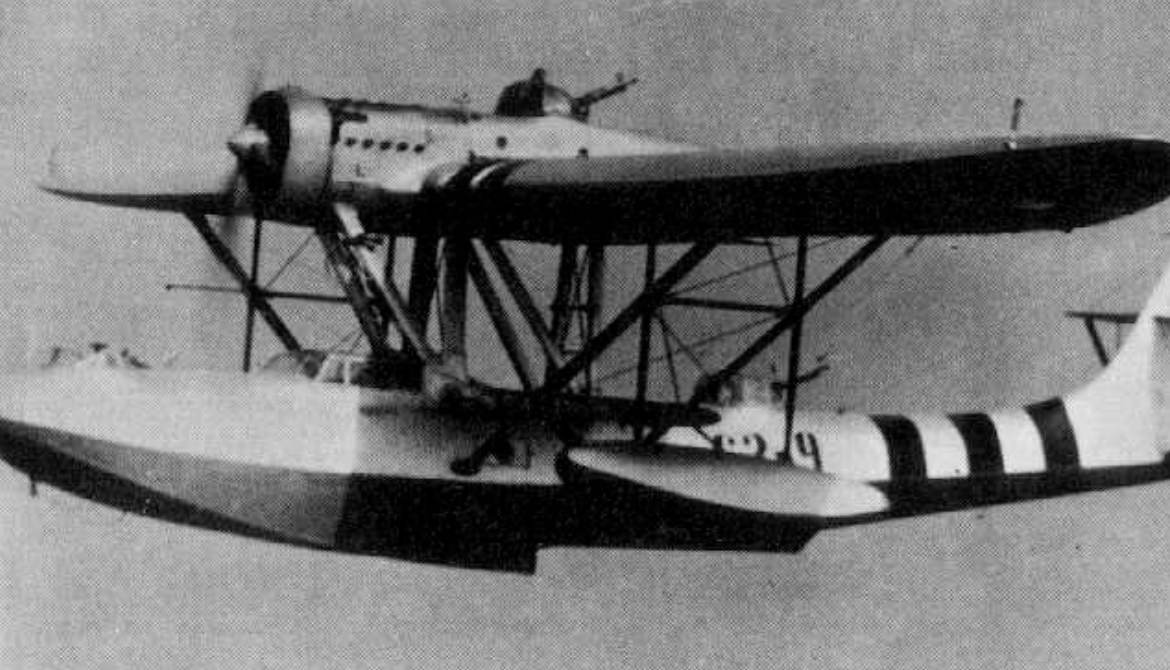


Cantieri Aeronautici e Navali Triestini,
CANT Z.501 Gabbiano
General characteristics
-
-
- Crew: 4-5
- Length: 14.3 m (46 ft 11 in)
- Wingspan: 22.5 m (73 ft 10 in)
- Height: 4.4 m (14 ft 5 in)
- Wing area: 62.00 m2 (667.4 sq ft)
-
Powerplant
-
- Empty weight: 3,850 kg (8,488 lb)
- Max takeoff weight: 7,050 kg (15,543 lb)
- Powerplant: 1 × Isotta Fraschini Asso XI R.2C.15 , 656 kW (880 hp)
- Propellers: 3-bladed metal propeller
-
-
-

Performance
- Maximum speed: 275 km/h (171 mph, 148 kn) at 2,499 m (8,200 ft)
- Cruise speed: 240 km/h (150 mph, 130 kn) at 1,999 m (6,560 ft)
- Range: 999 km (621 mi, 539 nmi)
- Ferry range: 2,398 km (1,490 mi, 1,295 nmi)
Armament
-
- Guns: 3 × 7.7 mm (0.303 in) Breda-SAFAT machine guns (initially Vickers), but many had only two when the nose position was removed
- Bombs: 640 kg (1,400 lb) carried externally
-
-
.
Links to Youtube & Others
Z.501s were used for search-and-rescue missions and anti-submarine patrols. The Z.501 was put into service with some modifications, including; turrets for the machine guns, and some reinforcement of the airframe that increased the weight by 500 kg (1,100 lb).

Cantieri Aeronautici,
CANT Z.501 Gabbiano
Generally, the Z.501 had a mixed reputation. It was pleasant to fly, having low wing loading and good performance (when it was first introduced).
Youtube Link
The aircraft was used for reconnaissance thanks to its long endurance but it was vulnerable to enemy fighters or even bombers
Read more in
Cantieri Aeronautici e Navali Triestini