Construcciones - SA
Casa C-101 Aviojet
Introduction 17 March 1980
First flight 27 June 1977
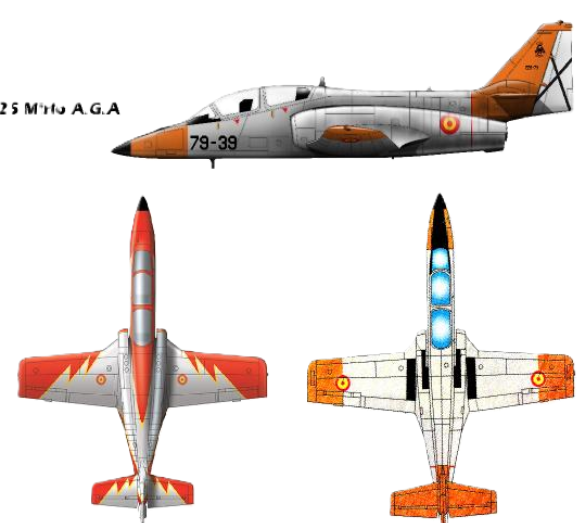

Construcciones Aero SA
Casa C-101 Aviojet
 |
|
| General information | |
|---|---|
| Type | Advanced jet trainer and light attack aircraft |
| Manufacturer | CASA |
| Status | Operational |
| Primary users | Spanish Air and Space ForceChilean Air Force Honduran Air Force Royal Jordanian Air Force |
| Number built | 166 |
| History | |
| Introduction date | 17 March 1980[1] |
| First flight | 27 June 1977 |
.
History Construcciones-
Aeronáuticas SA
Casa C-101 Aviojet
Introduction date 17 March 1980 First flight 27 June 1977

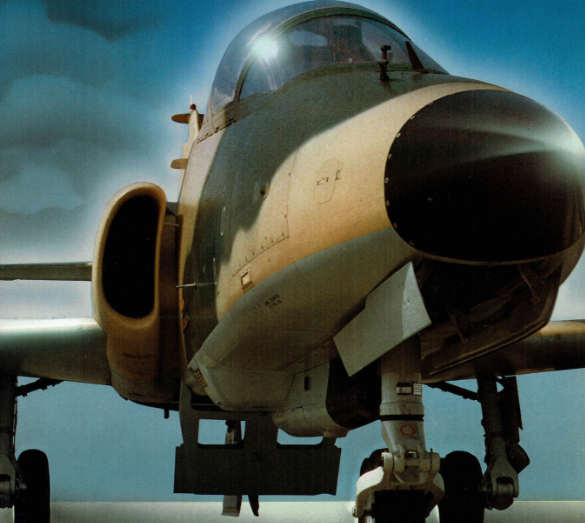
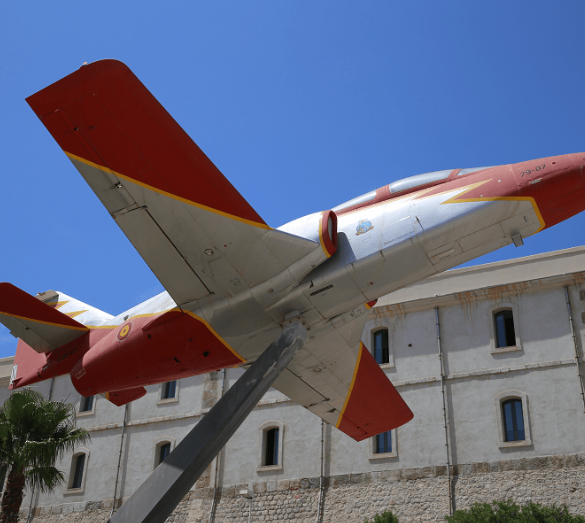
The CASA C-101 Aviojet is a low-wing single engine jet-powered advanced trainer and light attack aircraft designed and manufactured by Spanish aircraft company Construcciones Aeronáuticas SA (CASA).
The C-101 was developed in response to a Spanish Air Force requirement, which needed a replacement for the outdated Hispano Saeta. During 1975, CASA commenced work on what would become the C-101. In addition to its own design team, technical assistance was provided by Germany's Messerschmitt-Bölkow-Blohm (MBB) and the United States' Northrop. In June 1977, the first of four prototypes performed the type's maiden flight. The design was somewhat reminiscent of other jet trainers of the era, such as the BAE Hawk and the Alpha Jet, but was less aerodynamically sophisticated, being equipped with an unswept wing. Performance of the C-101 during flight testing was reported in excess of predictions.
Design and development


The C-101 was designed in response to a Spanish Air Force requirement issued in 1975, calling for a new jet trainer to replace its aging fleet of Hispano HA-200s and Ha.220s. Akin to the majority of contemporary European jet trainers, it was also to have a limited attack capability. During 1972, Hispano had been absorbed by Spanish aircraft company Construcciones Aeronáuticas SA (CASA), who took an interest in the trainer requirement. During October 1975, CASA was awarded a development contract based upon their submission, requiring a pair of static airframes and four flight-capable prototypes to be built for testing purposes at a cost of 1,297 million pesetas ($22 million).
To develop the aircraft, CASA sought technical assistance from abroad. Both the German manufacturing conglomerate Messerschmitt-Bölkow-Blohm (MBB) and American defense company Northrop opted to participate in the venture; specifically, engineers at MBB worked on the design of the rear fuselage and tail section while Northrop's team were responsible for the design of the aircraft's wings and engine inlets. Out of these efforts, a relatively conventional design was developed; according to aviation author John C. Fredriksen, the principles of simplicity and economy were highly emphasised by the design, shunning high performance features
0
HrEndurance
0
KmCombat RANGE
0
Km/hAircraft Speed
0
Max Crew
Photo Gallery
Construcciones-
Aeronáuticas SA
Casa C-101 Aviojet
Introduction date 17 March 1980 First flight 27 June 1977

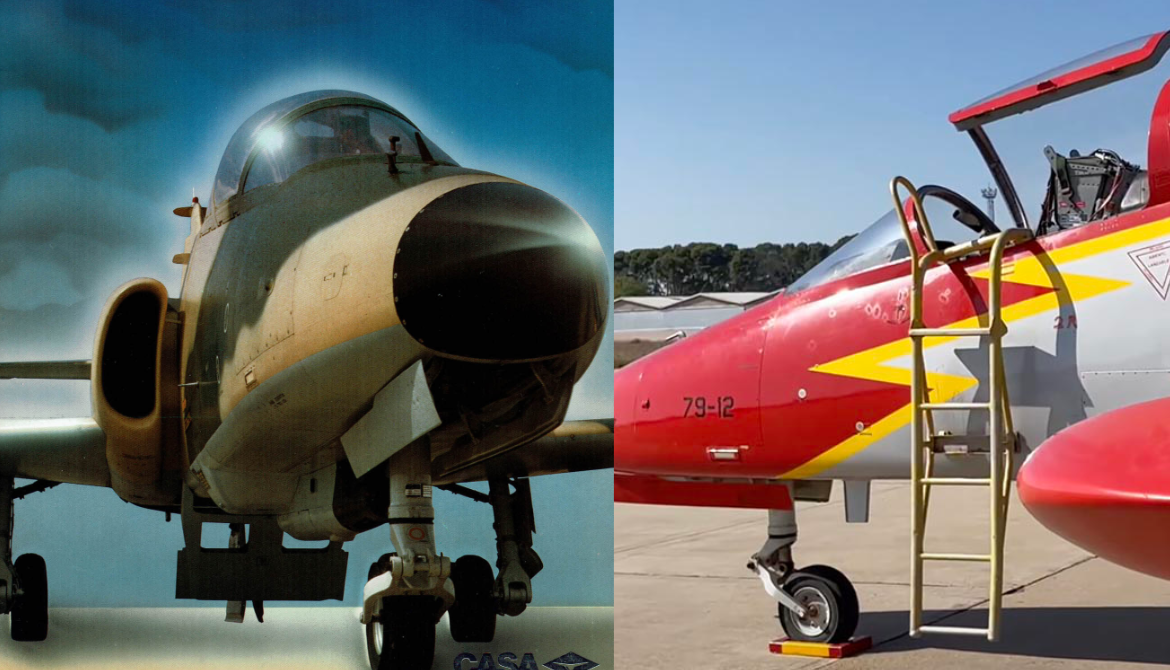
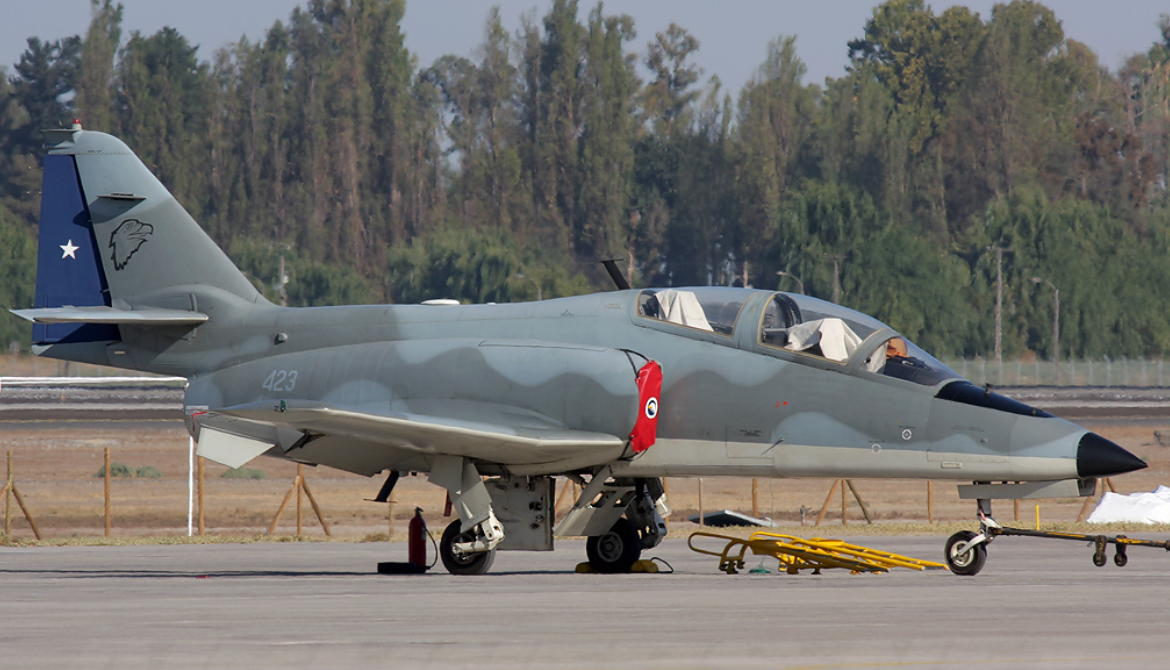


Construcciones- Aeronáuticas SA Casa C-101 Aviojet Introduction date 17 March 1980 First flight 27 June 1977
General characteristics
- Crew: 2
- Length: 12.5 m (41 ft 0 in)
- Wingspan: 10.6 m (34 ft 9 in)
- Height: 4.25 m (13 ft 11 in)
- Wing area: 20 m2 (220 sq ft)
Powerplant
- Powerplant: 1 × Honeywell TFE731-5-1J turbofan engine, 19.13 kN (4,300 lbf) thrust
- Military Power Reserve (MPR): 20.91 kN (4,700 lbf)h

Specifications
- Maximum speed: 769 km/h / 4,500 kg
-
-
-
-
- Combat range: 519 km (322 mi, 280 nmi) typical lo-lo-lo interdiction, with 4x 250 kg
-
-
- Endurance: typical armed patrol – 3 hours 30 minutes
-
-
- Service ceiling: 12,800 m
Links to Youtube & Others
The final version of the C-101 to be developed, designated C-101DD, was first demonstrated by CASA during 1985. This model featured vastly improved avionics and featured systems such as a head-up display, HOTAS-cockpit, AN/ALR-66 radar warning receiver, chaff and flare countermeasures, as well as the capability to carry the AGM-65 Maverick air-to-ground missile; however, as of 2000 it had not attracted any orders.

Construcciones Aero SA
Casa C-101 Aviojet
Sixteen similar aircraft, the C-101CC-04 were sold to Jordan.
Youtube Link
The first HC-144 was delivered to the U.S. Coast Guard in December 2006. Initial Operational Capability (IOC) was achieved in April 2009; thirteen Ocean Sentry aircraft were operational with the Coast Guard in January 2011.
Read more in Airbus Group, Inc.