Eidgenössische Emmen EFW
EFW N-20 Aiguillon (in English: "Stinger")
Number built 1
History
First flight 8 April 1952


Eidgenössische Flugzeugwerke Emmen
EFW N-20 Aiguillon
 |
|
| General information | |
|---|---|
| Type | Fighter aircraft |
| National origin | Switzerland |
| Manufacturer | Eidgenössische Flugzeugwerke Emmen [de] |
| Status | Cancelled |
| Primary user | Swiss Air Force |
| Number built | 1 |
| History | |
| First flight | 8 April 1952 |
.
History EFW N-20 Aiguillon (in English: "Stinger")
Number built 1 History
First flight 8 April 1952
Status Cancelled
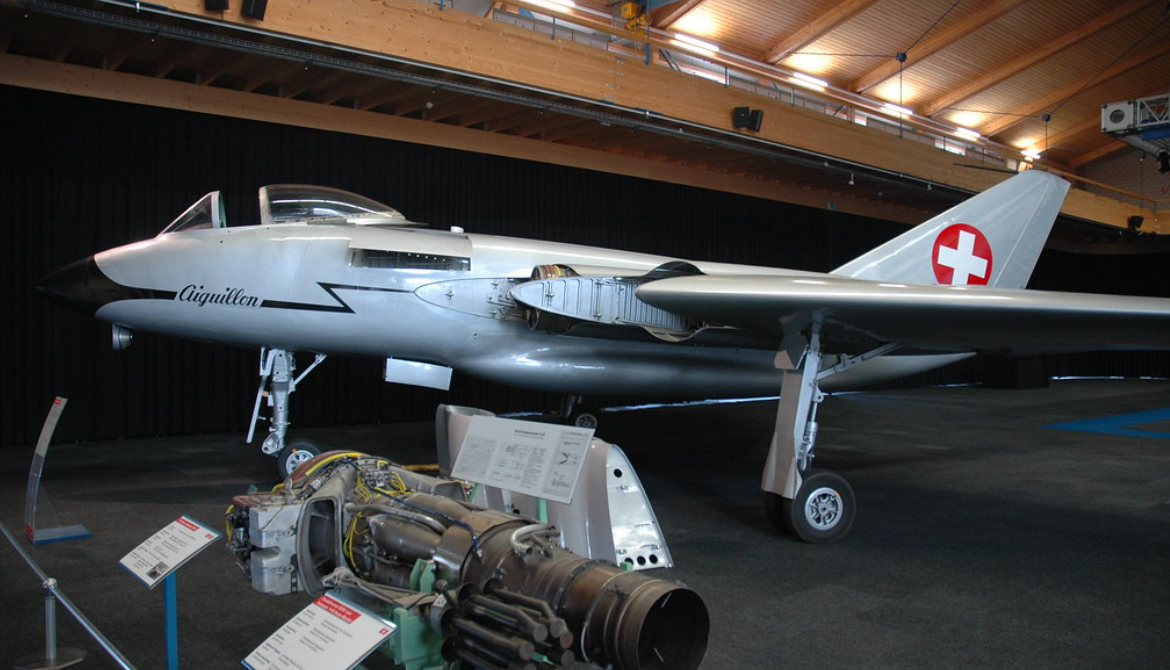
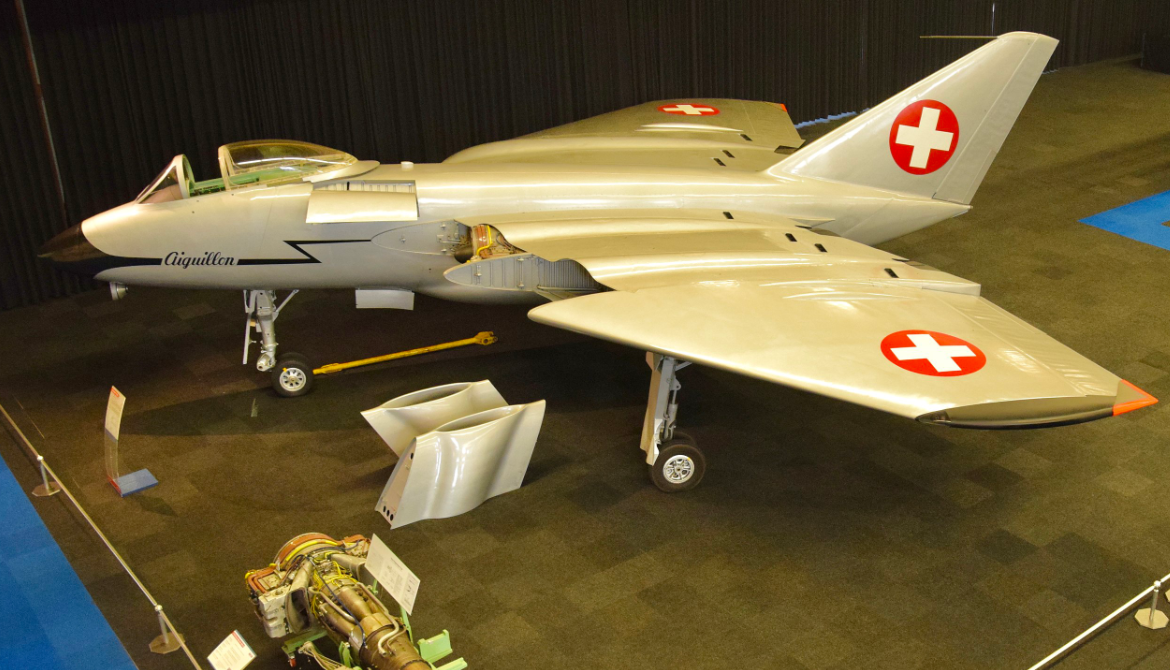
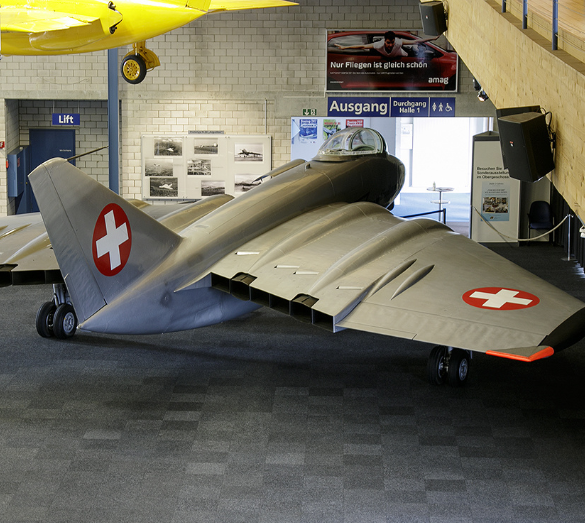
The EFW N-20 Aiguillon (in English: "Stinger") was Switzerland's first indigenous jet fighter project. The Swiss Federal Aircraft Factory developed a design for a four-engined swept winged fighter following the end of the Second World War. An unpowered sub-scale N-20.01 glider and a turbojet powered test aircraft, also sub-scale and known as the N-20.02 Arbalète ("Crossbow"), were test flown. A fighter prototype N-20.10 Aiguillon was built but never flown, and a twin-engines N.20.20 Harpon was also proposed but not followed up.
The Arbalète and Aiguillon are on public display at the Flieger Flab Museum, Dübendorf.
Design and development
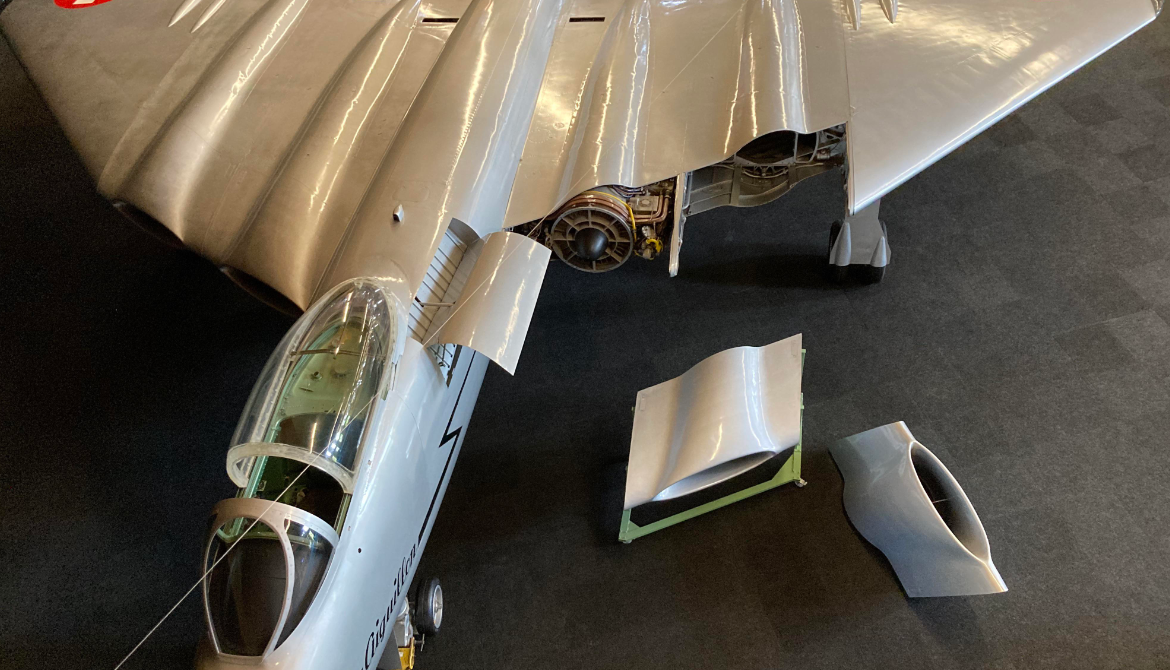
The aircraft was to be powered by four turbofan engines buried in the wings, with the bypass air feeding cold-air tunnels each side of the engines including a combustion chamber where additional thrust could be gained. The bypass air could be deflected though large slots on the upper and lower wings to act as aerodynamic flaps or thrust reversers. Two engines could be shut down in flight to increase range. It was planned that the N-20 would carry its armament in a detachable weapons bay, capable of carrying large loads of cannons, rockets or bombs.

0
KmCeiling
0
KmCombat RANGE
0
Km/hAircraft Speed
0
Max Crew
Photo Gallery
EFW N-20 Aiguillon (in English: "Stinger")
Number built 1 History
First flight 8 April 1952
Status Cancelled


EFW N-20 Aiguillon (in English: "Stinger") Number built 1 History First flight 8 April 1952 Status Cancelled
General Info
-
-
- Crew: 1
- Length: 12.5 m (41 ft 0 in)
- Wingspan: 12.6 m (41 ft 4 in)
- Height: 3.13 m (12 ft 0 in)
- Wing area: 54 m2 (570 sq ft)
- Empty weight: 9,000 kg
- Gross weight: 8,709 kg
-
Powerplant: 4 × Sulzer Swiss Mamba turbofan, 6.2 kN (1,400 lbf) thrust
Performance
- Maximum speed: 1,000 km/h
- Range: 500 km (310 mi, 270 nmi)
- Service ceiling: 11,000 m
-

-
EFW N-20.10 Aiguillon
The full scale aircraft was estimated to have a maximum speed of 1,095 km/h (680 mph), but the initial converted Mamba, the SM-1, which was test-flown under a de Havilland Mosquito in 1948 and was the first turbofan to fly, did not generate adequate thrust. Considerable further work was required for the definitive two-shaft SM-5 engine, which was meant to generate 14.7 kN (3,300 lbf) thrust.
Links to Youtube & Others
The EFW N-20 Aiguillon (Stinger) was Switzerland's first indigenous jet fighter aircraft with the Armstrong Siddeley Mamba turboprop chosen as the basis for the N-20's engines. The converted powerplant was named Swiss Mamba SM-1 but only six engines were built (four fitted to the N-20 with two spares).

EFW N-20 Aiguillon
This is a rearward view illustrating the nice lines of the protoype, which is now on display at this wonderful museum.
Youtube Link
This is a rearward view illustrating the nice lines of the protoype, which is now on display at this wonderful museum.

Read more in Pilatus Aircraft Ltd.
.png)
.png)