Pilatus Aircraft Ltd.
Pilatus PC-7 Turbo Trainer
Introduction date PC-7: 1978
First flight PC-7:
12 April 1966
Manufactured 1966–present


Pilatus Aircraft Ltd. Pilatus PC-7 Trainer
.jpg) |
|
| Type | Trainer aircraft |
|---|---|
National origin Switzerland
First flight PC-7:
12 April 1966; 57 years ago (prototype)
18 August 1978; 45 years ago (production)
Introduction PC-7: 1978[1]
PC-7 Mk.II M: 1994
Status In service
Primary users Dutch Air Force ; Swiss Air Force
Produced 1966–present
Number built >618
Developed from Pilatus P-3
Variants Pilatus PC-9
.
History Pilatus Aircraft Ltd.
Pilatus PC-7 Trainer
Introduction date PC-7: 1978
First flight PC-7: 12 April 1966
Manufactured 1966–present

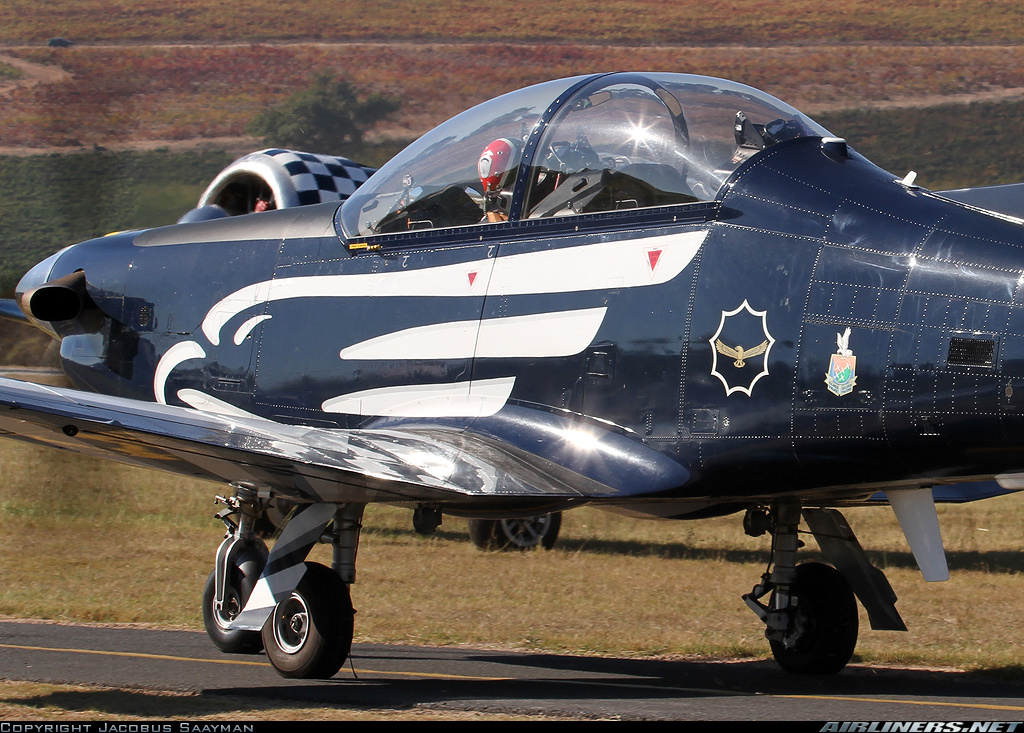
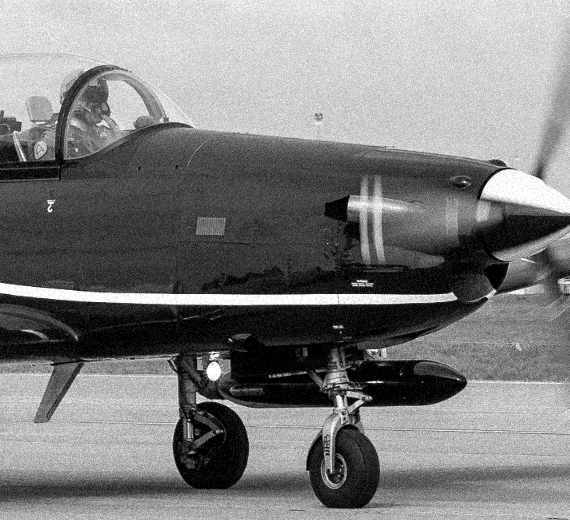
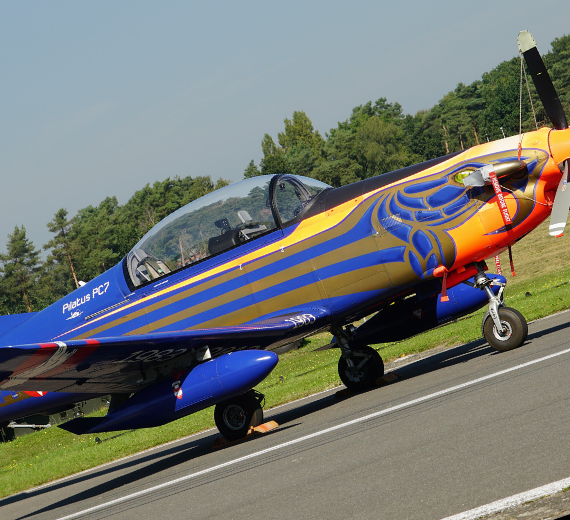
The Pilatus PC-7 Turbo Trainer is a low-wing tandem-seat training aircraft, designed and manufactured in Switzerland by Pilatus Aircraft. The aircraft is capable of all basic training functions, including aerobatics, instrument, tactical, and night flying
The PC-7 was developed from the preceding piston-powered Pilatus P-3,[1] largely differing by the adoption of a turboprop engine, a bubble canopy, and a new one-piece wing. Introduced during the 1970s, it has since developed a sizable presence of the global trainer market.[2] The type has been adopted by in excess of twenty air forces as their ab initio trainer, as well as multiple civilian operators. Over one million hours have reportedly been flown by PC-7s worldwide.[citation needed] In addition to training operations, some aircraft are armed and have been used for combat missions by several customers, including Chad, Iran, and Mexico, often in violation of the relevant export agreement between the customer and the Swiss government.
Development
Origins
Work on what would become the PC-7 commenced during the 1960s. It was based on the earlier piston-powered Pilatus P-3, the initial prototype being produced from the existing prototype P-3, principally differing by the substitution of its Lycoming O-435 engine with a Pratt & Whitney PT6A-20 turboprop power-plant. On 12 April 1966; 57 years ago, the modified prototype performed its maiden flight. However, the PC-7 programme was abruptly shelved following an accident involving the aircraft. The termination of work was reportedly driven by a lack of market interest.

0
KmCeiling
0
KmCombat RANGE
0
Km/hAircraft Speed
0
Max Crew
Photo Gallery
Pilatus Aircraft Ltd.
Pilatus PC-7 Trainer
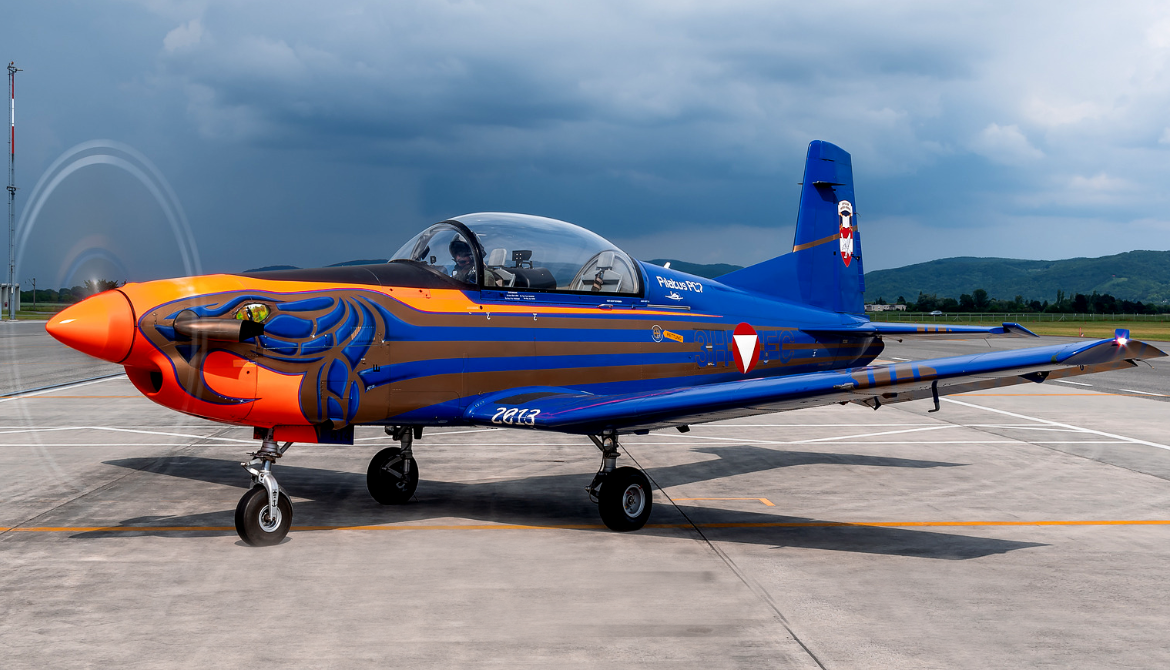
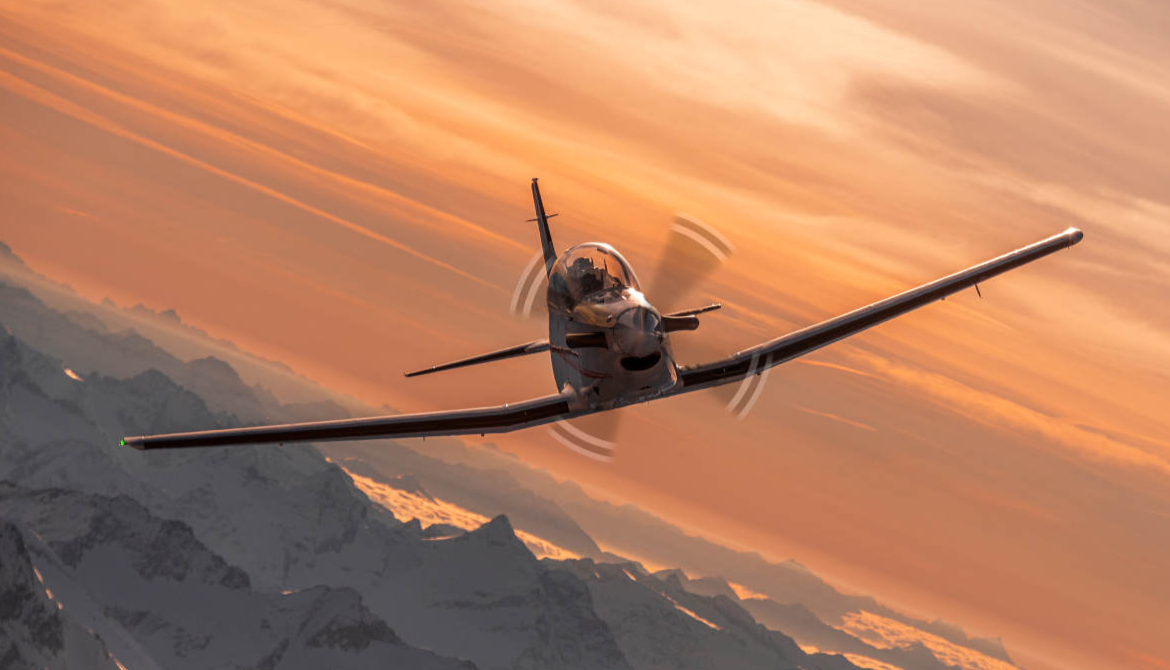
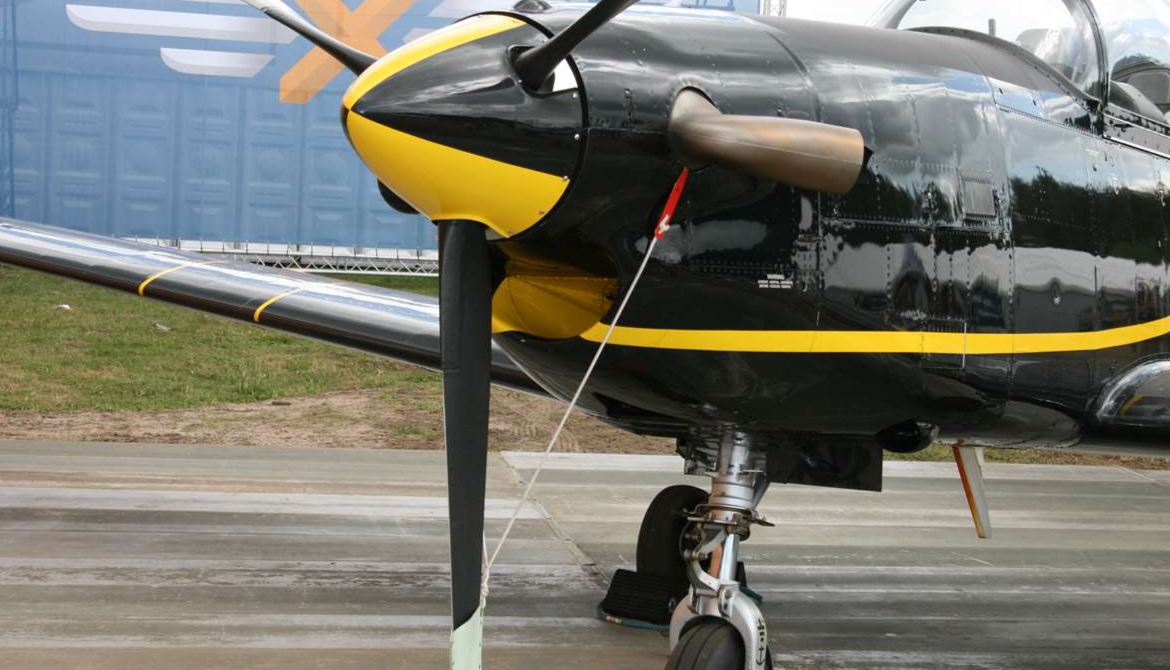


Pilatus Aircraft Ltd.
Pilatus Aircraft Ltd.
Pilatus PC-7 Trainer
General Info
-
-
- Crew: two, pilot instructor and student pilot
- Capacity: two
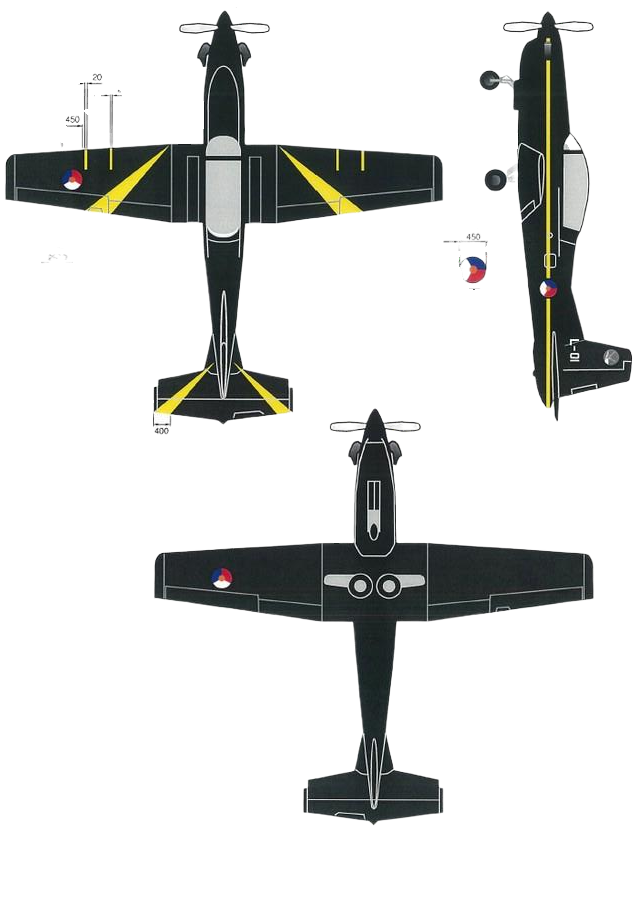
- Length: 9.78 m (32 ft 1 in)
- Wingspan: 10.40 m (34 ft 1 in)
- Height: 3.21 m (10 ft 6 in)
- Wing area: 16.60 m2 (178.7 sq ft)
-
Powerplant
-
-
- Empty weight: 1,330 kg
- Max takeoff weight: 2,700 kg
- Fuel capacity: 474 L (104 imp gal; 125 US gal) usable internal fuel,
2x 240 L (53 imp gal; 63 US gal) external fuel drop tanks
• Max landing weight: 2,565 kg - Powerplant: 1 × Pratt & Whitney Canada PT6A-25A turboprop, 410 kW (550 hp)(derated from 485 kW (650 shp))
- Propellers: 3-bladed Hartzell HC-B3TN-2 / T10173C-8 constant-speed propeller, 2.36 m diameter
-
Performance
- Maximum speed: 412 km/h (256 mph
- Cruise speed: 316 km/h (196 mph, 171 kn) (econ. cruise at 6,095 m
- Stall speed: 119 km/h (74 mph, 64 kn) (flaps and gear down, power off)
- Never exceed speed: 500 km/h
- Range: 1,200 km (750 mi, 650 nmi) standard range without external drop tanks, ferry range with external drop tanks, (cruise power, at 5,000 m (16,000 ft) - 20 min reserves)
- Ferry range: 2,630 km (1,630 mi,
- Endurance: 4 hr 22 min
- Service ceiling: 10,060 m
- g limits: -3 / +6
Armament
- Hardpoints: 6 × underwing hardpoints for bombs and rockets with a capacity of 1,040 kg (2,294 lb)
Links to Youtube & Others
All export sales of the PC-7 are subject to approval by the Swiss Government, whose authorisation is required prior to any delivery taking place.

Pilatus Aircraft Ltd.
Pilatus PC-7 Trainer
During the 1990s, the PC-7 Mk.II M was adopted as the basic trainer of the Royal Brunei Air Force (RBAirF) alongside the BAE Systems Hawk jet trainer.
Youtube Link
A number of PC-7s were employed by the Guatemalan Air Force in air strikes and for close air support (CAS) during the Guatemalan civil war, starting in 1982, until the end of the conflict in 1996.
Read more in Pilatus Aircraft Ltd.