Vickers Limited Armstrong Whitworth & Co Ltd
Vickers Vimy F.B.27A Vimy II
Introduction date 1919
First flight 30 November 1917


Vickers & Co Ltd
Vimy F.B.27A Vimy II
 |
|
| General information | |
|---|---|
| Type | Heavy bomber |
| Manufacturer | Vickers Limited |
| Designer | Rex Pierson |
| Primary user | Royal Air Force |
| History | |
| Introduction date | 1919 |
| First flight | 30 November 1917 |
| Retired | 1933 |
| Variants | Vickers Vernon Vickers Virginia |
.
History Vickers Limited Armstrong Whitworth & Co Ltd
Vickers Vimy F.B.27A Vimy II
Introduction date 1919
First flight 30 November 1917
The Vickers Vimy was a British heavy bomber aircraft developed and manufactured by Vickers Limited. Developed during the latter stages of the First World War to equip the Royal Flying Corps (RFC), the Vimy was designed by Rex Pierson, Vickers' chief designer.
Only a handful of Vickers Vimy aircraft had entered service by the time the Armistice of 11 November 1918 came into effect, so the type did not serve in active combat operations during the war, but the Vimy became the core of the Royal Air Force (RAF)'s heavy bomber force throughout the 1920s. The Vimy achieved success as both a military and a civil aircraft, the latter using the Vimy Commercial variant. A dedicated transport derivative of the Vimy, the Vickers Vernon, became the first troop-transport aircraft operated by the RAF.
Design

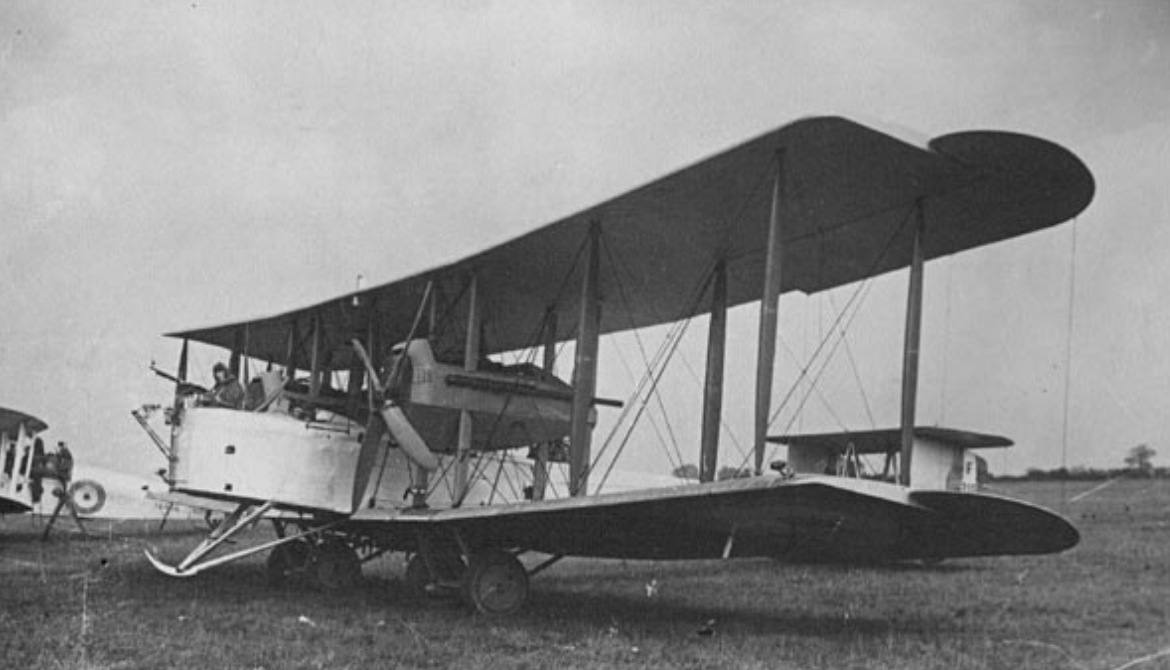
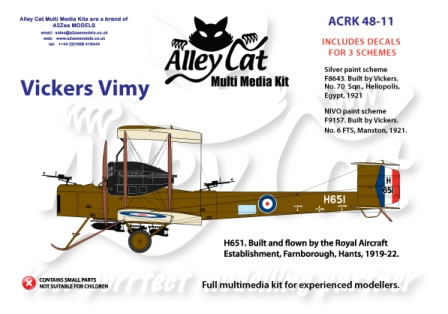
The Vickers F.B.27 Vimy is an equal-span twin-engine four-bay biplane, with balanced ailerons on both upper and lower wings. The engine nacelles were positioned mid-gap and contained the fuel tanks. It has a biplane empennage with elevators on upper and lower surfaces and twin rudders. The main undercarriage consists of two pairs of wheels, each pair carried on a pair of tubular steel V-struts. There is a tail-skid and an additional skid mounted below the nose of the fuselage to prevent nose-overs.
The aircraft was designed to accommodate a three-man crew and a payload of 12 bombs. In addition to the pilot's cockpit, which was positioned just ahead of the wings, there were two positions for gunners, one behind the wings and the other in the nose, each with a pair of Scarff ring-mounted Lewis guns; the rear cockpit mounting was commonly not fitted during the interwar period. Provision for a maximum of four spare drums of ammunition were present in the nose position, while up to six drums could be carried in the rear position
Variants
- F.B.27 Vimy
- Prototypes; four built, powered by two 200 hp (150 kW) Hispano-Suiza 8 piston engines..
- F.B.27A Vimy II
- Twin-engine heavy bomber aircraft for the RAF, powered by two 300 hp (220 kW) Rolls-Royce Eagle VIII piston engines.
- Vimy Ambulance
- Air ambulance version for the RAF.
- Vimy Commercial
- Civilian transport version, powered by two 300 hp (220 kW) Rolls-Royce Eagle VIII and later 360 hp (270 kW) Rolls-Royce Eagle IX piston engines.
- A.N.F. 'Express Les Mureaux'
- Vimy Commercial No.42 re-engined with 2x 370 hp (280 kW) Lorraine 12Da V-12 engines by ANF Les Mureaux.
0
KmCeiling
0
KmCombat RANGE
0
Km/hAircraft Speed
0
Max Crew
Photo Gallery
Vickers Limited Armstrong Whitworth & Co Ltd
Vickers Vimy F.B.27A Vimy II
Introduction date 1919
First flight 30 November 1917



Vickers Limited Armstrong Whitworth & Co Ltd
Vickers Vimy F.B.27A Vimy II
Introduction date 1919
First flight 30 November 1917
General Info
-
-
- Crew: 3
- Length: 43 ft 7 in (13.28 m)
- Wingspan: 68 ft 1 in (20.75 m)
- Height: 15 ft 8 in (4.78 m)
- Wing area: 1,330 sq ft (124 m2)
-
Powerplant
-
-
- Empty weight: 7,104 lb (3,222 kg)
- Max takeoff weight: (4,937 kg)
- Powerplant: 2 × Rolls-Royce Eagle VIII water-cooled V12 engines, 300 hp (220 kW) each
-
Performance
- Maximum speed: 100 mph (160 km/h)
- Range: 900 mi (1,400 km, 780 nmi)
- Service ceiling: 7,000 ft (2,100 m)
Armament
-
- Guns: 1 × .303 in (7.7 mm) Lewis Gun in Scarff ring in nose and 1 × in Scarff ring in mid-fuselage
- Bombs: 2,476 lb (1,123 kg) of bombs
Links to Youtube & Others
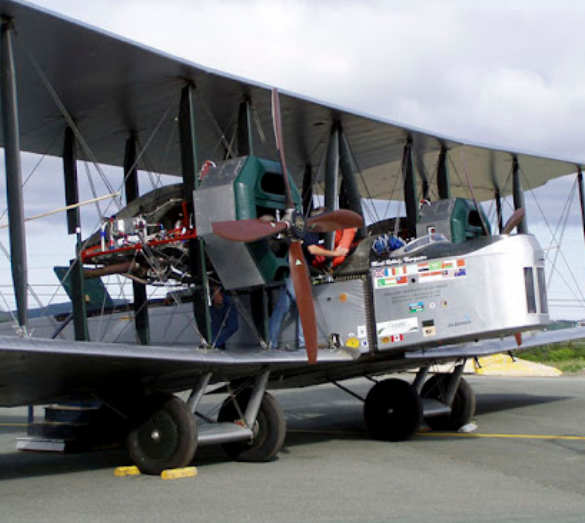
On 12 November 1919, Ross and Keith Smith, with mechanics Wally Shier and Jim Bennett, set out from Hounslow, near London, for Australia in a Vickers Vimy. Arriving 28 days later in Darwin, NT, they claimed the £10,000 prize offered by the Commonwealth Government for the first Australians to fly from England to Australia in less than 30 days.

Vickers & Co Ltd
Vimy F.B.27A Vimy II
BEA, and its nationalised successor British Airways (BA), vigorously operated the Viscount on Britain's domestic routes
Youtube Link
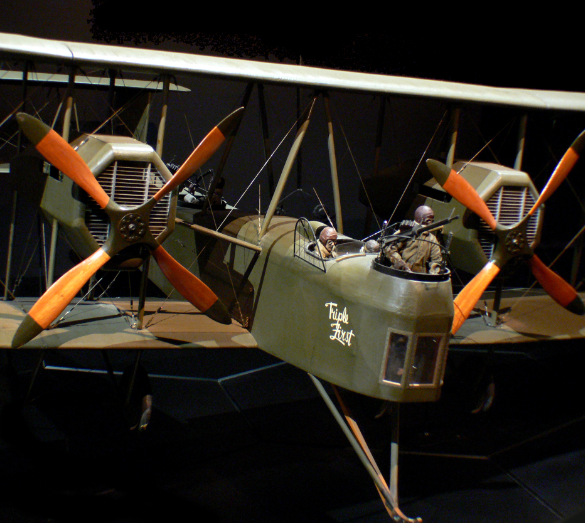
When the Australian War Museum opened in the Melbourne Exhibition Building on Anzac Day 1922
Read more in Vickers-Armstrongs Limited