Vickers Limited Armstrong Whitworth & Co Ltd
"Queen Of The Skies"
Vickers VC10 type 1101
First flight 29 June 1962


Vickers Limited
Vickers VC10 type 1101
|
|||
|---|---|---|---|
| National origin | United Kingdom | ||
| Manufacturer | Vickers-Armstrongs | ||
| First flight | 29 June 1962 | ||
| Introduction | BOAC, 29 April 1964 | ||
| Retired | Royal Air Force, 20 September 2013 | ||
| Status | Retired | ||
| Primary users | BOAC East African Airways Ghana Airways Royal Air Force |
||
| Produced | 1962–1970 | ||
| Number built | 54 | ||

.
History Vickers Limited Armstrong Whitworth & Co Ltd
Vickers VC10 type 1101, First flight 29 June 1962
"Queen Of The Skies"
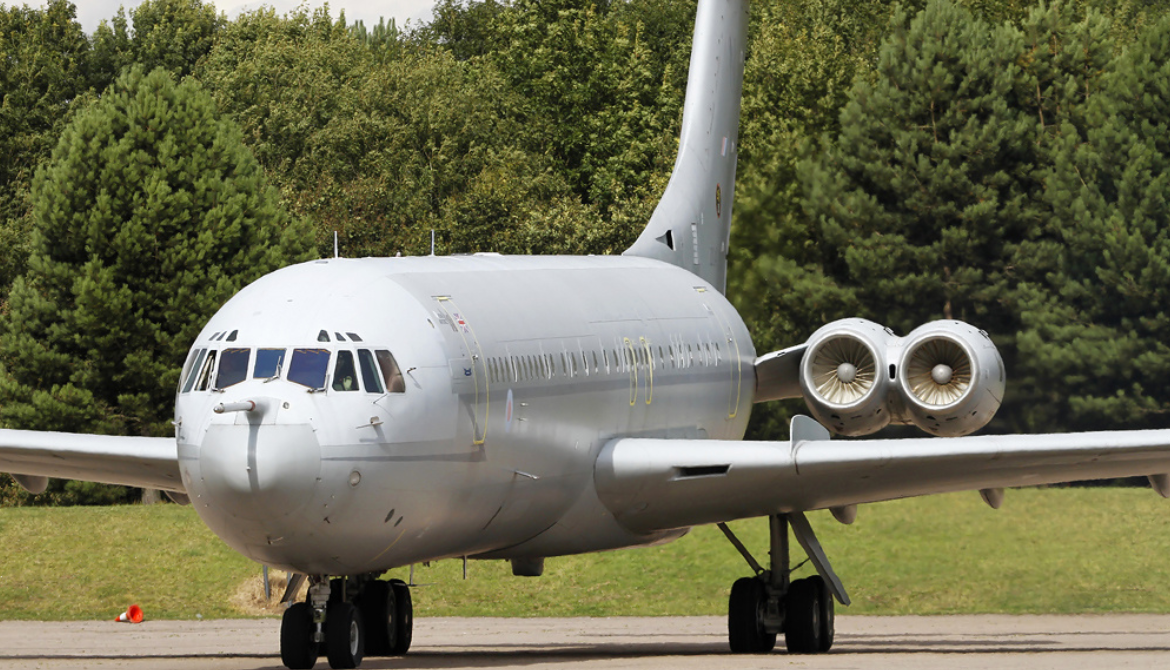
The Vickers VC10 is a retired mid-sized, narrow-body long-range British jet airliner designed and built by Vickers-Armstrongs (Aircraft) Ltd and first flown at Brooklands, Surrey, in 1962. The VC10 is often compared to the larger Soviet Ilyushin Il-62, the two types being the only airliners to use a rear-engined quad layout, while the smaller Lockheed JetStar business jet also has this engine arrangement.
The VC10 was designed to operate on long-distance routes from the shorter runways of the era and commanded excellent hot and high performance for operations from African airports. The performance of the VC10 was such that it achieved the fastest crossing of the Atlantic by a subsonic jet airliner of 5 hours and 1 minute, a record that was held for 41 years, until February 2020 when a British Airways Boeing 747 broke the record at 4 hours 56 minutes due to Storm Ciara. Only the supersonic Concorde was faster at 2 hours, 52 minutes, 59 seconds. Although only a relatively small number of VC10s were built, they provided long service with BOAC and other airlines from the 1960s to 1981
Design and development
Background

Although privately owned, Britain's aviation industry had been government-managed in practice, particularly during the Second World War. Design and manufacture of transport aircraft had been abandoned to concentrate on production of combat aircraft with Britain's transport aircraft needs being met by the provision of US aircraft through Lend-Lease. In 1943, the Brabazon Committee introduced command economy-style principles into the industry, specifying a number of different types of airliners that would be required for the post-war years, though it assumed that US dominance in transport aircraft would translate into leadership in long-range airliners and conceded in principle that the industry might have to cede the long-range market to US makers.
During the 1950s, the government required the aviation industry to consolidate: in consequence only two engine makers were left by 1959: Rolls-Royce and Bristol Siddeley. In 1960, the British Aircraft Corporation (BAC) encompassed Vickers, Bristol and English Electric's aviation interests, whilst Hawker Siddeley built on de Havilland's heavy aircraft experience and Westland consolidated helicopter manufacture.[5] The British government also controlled route-licensing for private airlines and also oversaw the newly established publicly owned British Overseas Airways Corporation (BOAC) long-range and British European Airways (BEA) short and medium-range airlines.
Concept


Though BOAC had ordered modified Comet 4s, it viewed the type as an intermediate rather than a long term type. In 1956, BOAC ordered 15 Boeing 707s. These were oversized and underpowered for BOAC's medium-range Empire (MRE) African and Asian routes, which involved destinations with "hot and high" airports that reduced aircraft performance, notably between Karachi and Singapore, and could not lift a full load from high-altitude airports like Kano or Nairobi. Several companies proposed a suitable replacement. De Havilland offered the DH.118, a development of the Comet 5 project while Handley Page proposed the HP.97, based on their V bomber, the Victor. After carefully considering the routes, Vickers offered the VC10.[9] Crucially, Vickers was the only firm willing to launch its design as a private venture, instead of relying on government financing
0
KmCeiling
0
KmCombat RANGE
0
Km/hAircraft Speed
0
Max Crew
Photo Gallery
Vickers Limited Armstrong Whitworth & Co Ltd
Vickers VC10 type 1101 "Queen Of The Skies"
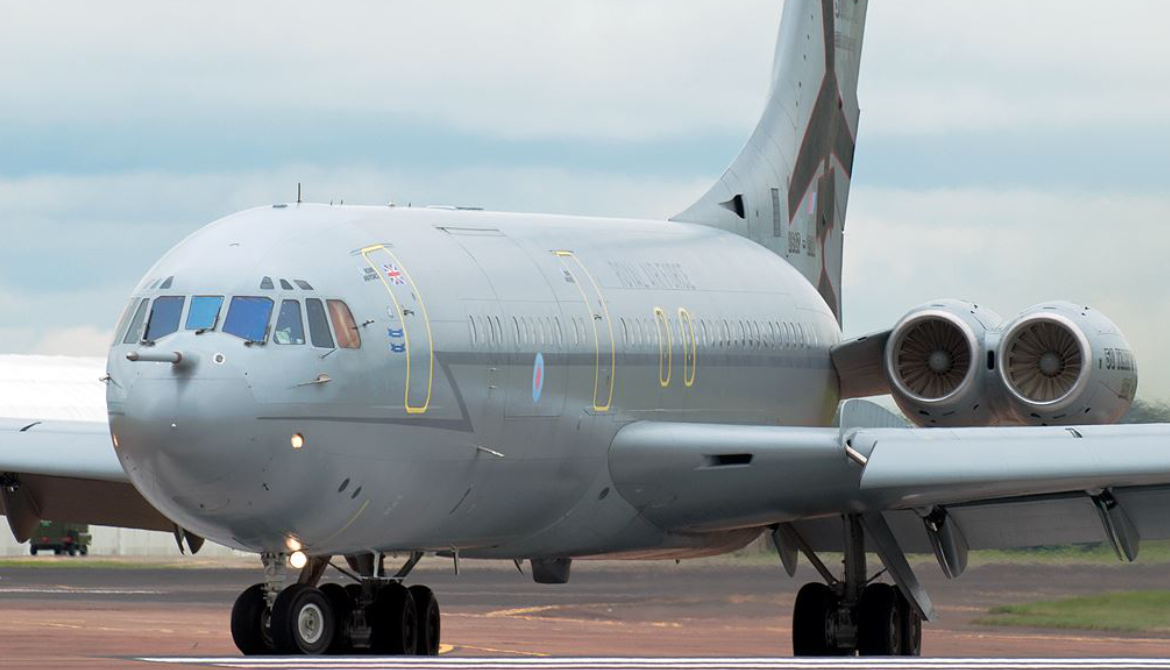
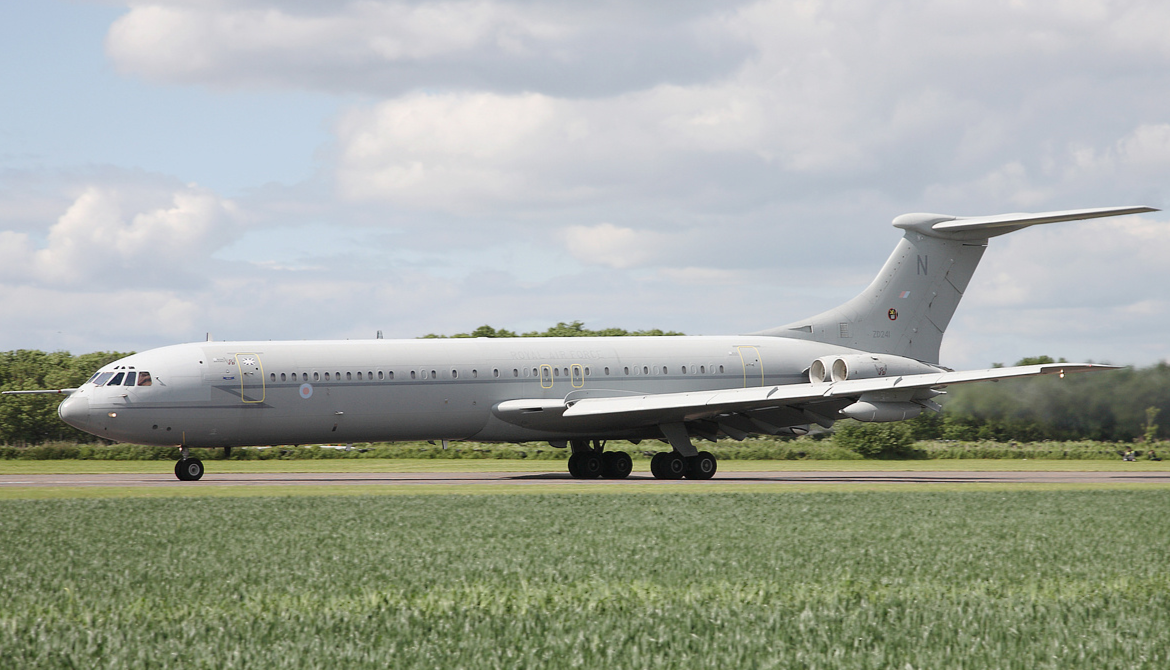


Vickers Limited Armstrong Whitworth & Co Ltd
Vickers VC10 type 1101
General Info
-
-
- Crew: 4 + 3 flight attendants
- Capacity: 151 passengers
- Length: 158 ft 8 in (48.36 m)
- Wingspan: 146 ft 2 in (44.55 m)
- Height: 39 ft 6 in (12.04 m)
- Wing area: 2,851 sq ft (264.9 m2)
-
Powerplant
- Empty weight: 139,505 lb (63,278 kg)
- Max takeoff weight: 312,000 lb (141,521 kg)
- Fuel capacity:81,490 L
- Powerplant: 4 × Rolls-Royce Conway RCo 42 turbofans, 21,000 lbf (93 kN) thrust each
-
-

Performance
- Maximum speed: (930 km/h, 500 kn)
- Cruise speed: 550 mph (890 km/h, 480 kn) at 38,000 ft (12,000 m) (econ cruise)
- Range: 5,850 mi (9,410 km, 5,080 nmi)
- Service ceiling: 43,000 ft (13,000 m)
- Rate of climb: 1,920 ft/min (9.8 m/s)
Links to Youtube & Others
When Vickers Armstrong's stunningly beautiful VC10 first took to the skies in 1962, its soon to be universally accepted nickname seemed inevitable. That long, noble fuselage, the elegant swept wing and the magnificent sweep of that soaring tail quickly earned her the title, "Queen of the Skies". But this superb airliner - still second only to Concorde for the fastest passenger-carrying flight across the Atlantic - had a troubled and difficult birth.

Vickers Limited
Vickers VC10 type 1101
Vickers VC10 is a retired mid-sized, narrow-body long-range British jet airliner

Youtube Link
Though BOAC had ordered modified Comet 4s, it viewed the type as an intermediate rather than a long term type

Read more in Vickers-Armstrongs Limited

.png)