Curtiss Wright
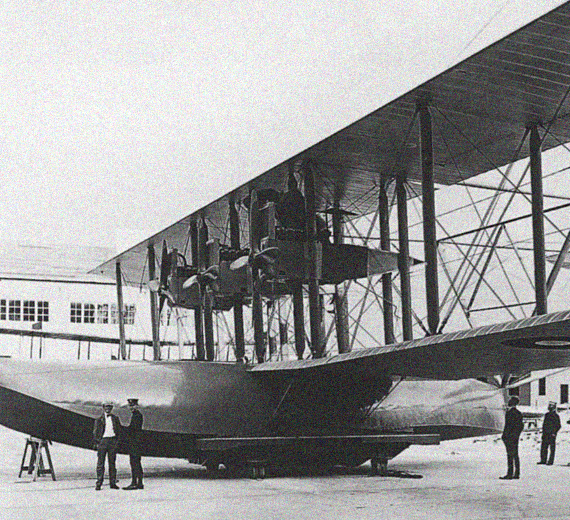
NC-4 flying boat "Nancy Boats"
Manufactured1917 Serial A2294
First Flight 30 April 1919

Curtiss Wright
NC-4 flying boat
Type Curtiss NC
Manufacturer Curtiss Aeroplane and Motor Company
Manufactured1917
Serial A2294
First flight 30 April 1919
Owners and operators U.S. Navy
In service 1919–1920
Flights 7
Total hours 21379
Preserved at National Naval Aviation Museum,
Pensacola, Florida
.
History Curtiss Wright Aeroplane
Curtiss NC-4 flying boat "Nancy Boats"
Manufactured1917 Serial A2294
First Flight 30 April 1919
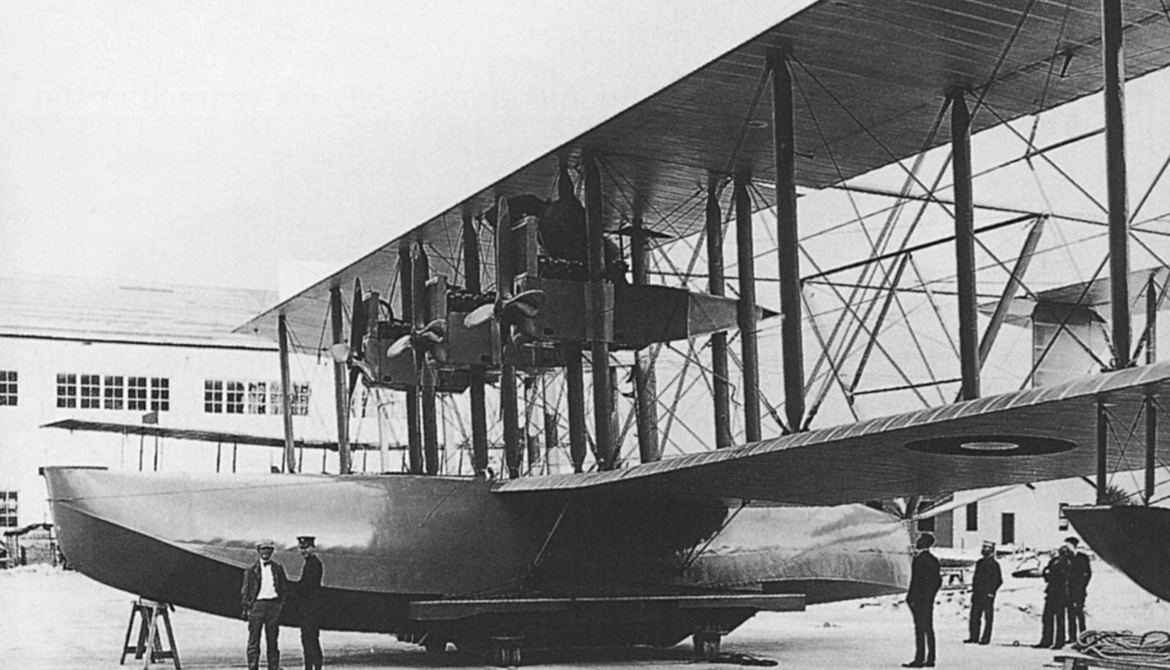
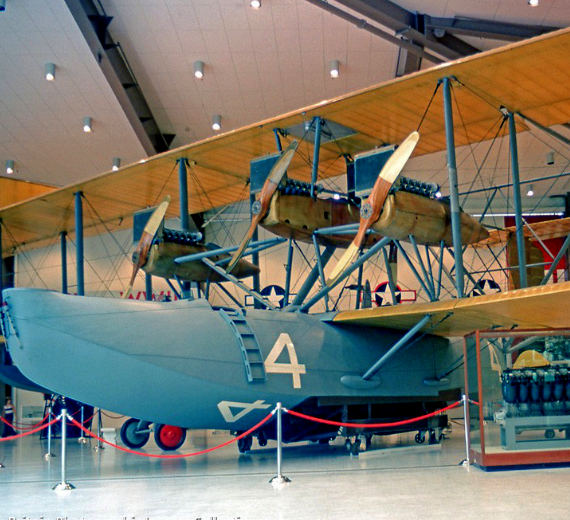
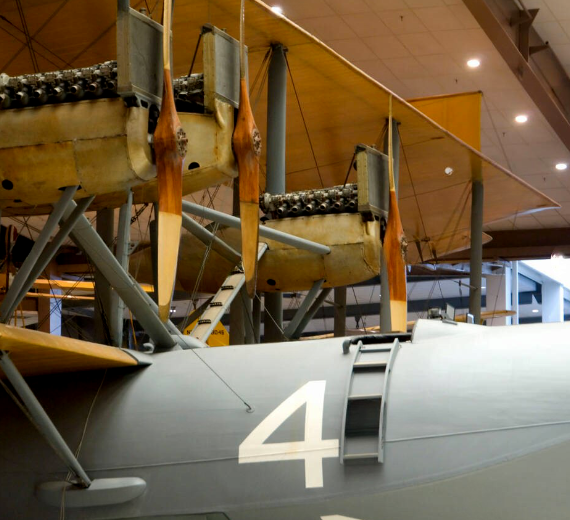
The NC-4 is a Curtiss NC flying boat that was the first aircraft to fly across the Atlantic Ocean, albeit not non-stop. The NC designation was derived from the collaborative efforts of the Navy (N) and Curtiss (C). The NC series flying boats were designed to meet wartime needs, and after the end of World War I they were sent overseas to validate the design concept.
The aircraft was designed by Glenn Curtiss and his team, and manufactured by Curtiss Aeroplane and Motor Company, with the hull built by the Herreshoff Manufacturing Corporation in Bristol, Rhode Island.
In May 1919, a crew of United States Navy and US Coast Guard aviators flew the NC-4 from New York State to Lisbon, Portugal, over the course of 19 days. This included time for stops for numerous repairs and crewmen's rest, with stops along the way in Massachusetts, Nova Scotia (on the mainland), Newfoundland, and twice in the Azores Islands. Then its flight from the Azores to Lisbon completed the first transatlantic flight between North America and Europe, and two more flights from Lisbon to northwestern Spain to Plymouth, England, completed the first flight between North America and Great Britain. This accomplishment was somewhat eclipsed in the minds of the public by the first nonstop transatlantic flight, made by the Royal Air Force pilots John Alcock and Arthur Whitten Brown two weeks later.
The transatlantic flight
_BHL40563513_(cropped).jpg)
0
MtrCeiling
0
hoursEndurance
0
Km/hAircraft Speed
0
Max Crew
Photo Gallery
Curtiss Wright
NC-4 flying boat "Nancy Boat"
Manufactured1917 Serial A2294
First Flight 30 April 1919




Curtiss Wright
CurtissNC-4 flying boat "Nancy Boats"
Manufactured1917 Serial A2294
First Flight 30 April 1919
General Info
-
-
- Crew: 5
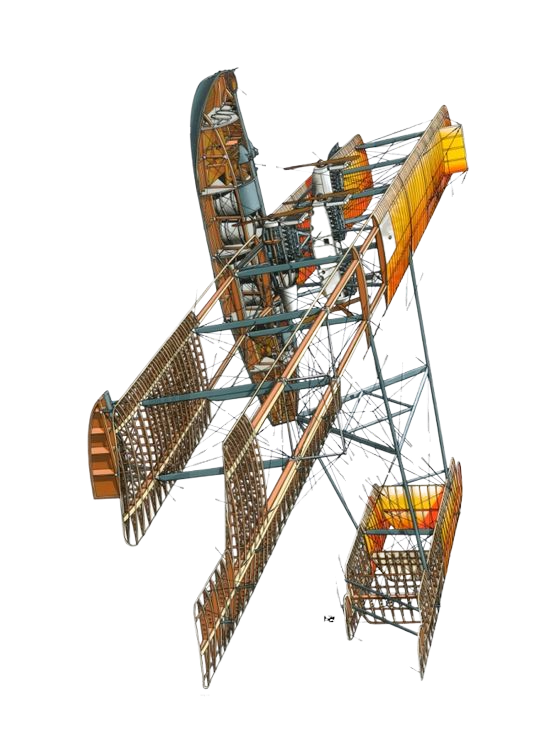
- Length: 68 ft 2 in (20.78 m)
-
- NC-2: 68 ft 2 in (20.78 m)
- Wingspan: 126 ft (38 m)
- Height: 24 ft 5 in (7.44 m)
- Wing area: 2,441 sq ft (226.8 m2)
-
Powerplant
-
- Empty weight: 16,000 lb (7,257 kg)
-
- NC-2: 14,100 lb (6,400 kg)
- Gross weight: 28,000 lb (12,701 kg)
-
- NC-2: 23,000 lb (10,000 kg)
- Powerplant: 4 × Liberty L-12 V-12 water-cooled piston engines, 400 hp (300 kW) each
-
- NC-1: 3x 360 hp (270 kW) low compression Liberty L-12 engines ; converted to four Liberty engines
- NC-2: 3x 400 hp (300 kW) Liberty L-12 engines ; converted to four Liberty engines as the NC-T
- Propellers: 4-bladed fixed-pitch propellers
-
Performance
- Maximum speed: 85 mph (137 km/h, 74 kn)
- Endurance: 14 hours 48 minutes
- Service ceiling: 2,500 ft (760 m)
-
- NC-2: 2,500 ft (760 m)
- Time to altitude: 2,000 ft (610 m) in 10 minutes
- Power/mass: 0.06 hp/lb (0.099 kW/kg)
.
Links to Youtube & Others
The transatlantic capability of the NC-4 was the result of developments in aviation that began before World War I. In 1908, Glenn Curtiss had experimented unsuccessfully with floats on the airframe of an early June Bug craft, but his first successful takeoff from water was not carried out until 1911, with an A-1 airplane fitted with a central pontoon. In January 1912.

Curtiss Wright
NC-4 flying boat
The U.S. Navy's transatlantic flight expedition began on 8 May 1919. The NC-4 started out in the company of two other Curtiss NCs, the NC-1 and the NC-3
Youtube Link
This culminated in a set of four identical aircraft, the NC-1, NC-2, NC-3 and the NC-4, the U.S. Navy's first series of four medium-sized Curtiss NC floatplanes made for the Navy by the Curtiss Aeroplane and Motor Company. The NC-4 made its first test flight on 30 April 1919
Read more in Curtiss Wright aircraft
.