JSC A.S. Yakovlev Design Bureau
Yakovlev Yak-38 ("Forger")

JSC A.S. Yakovlev
Yak-38 ("Forger")
.jpg) |
|
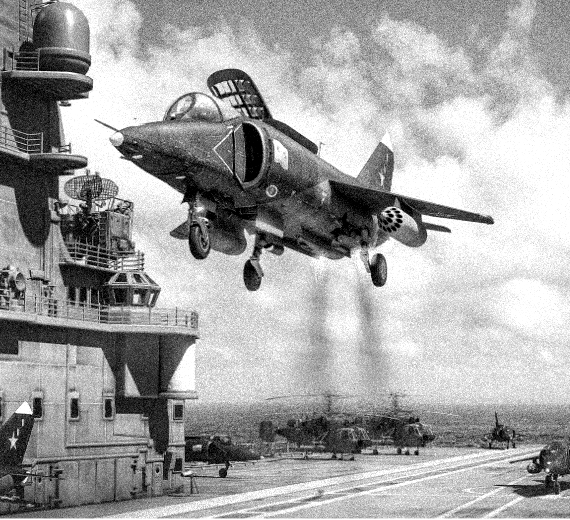
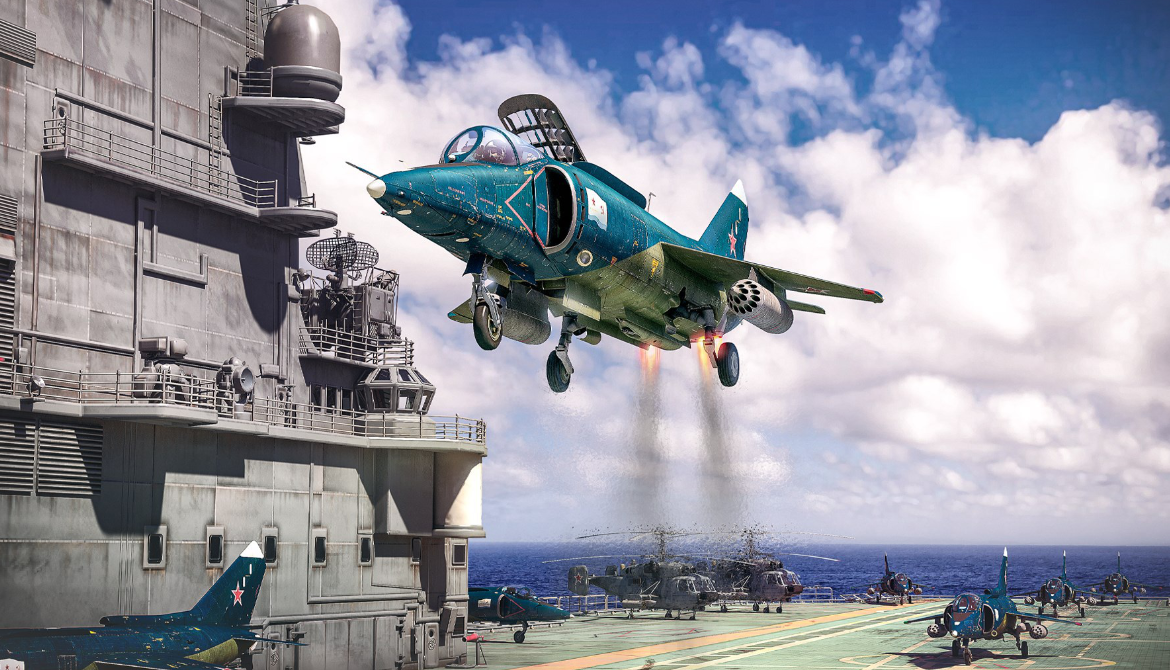
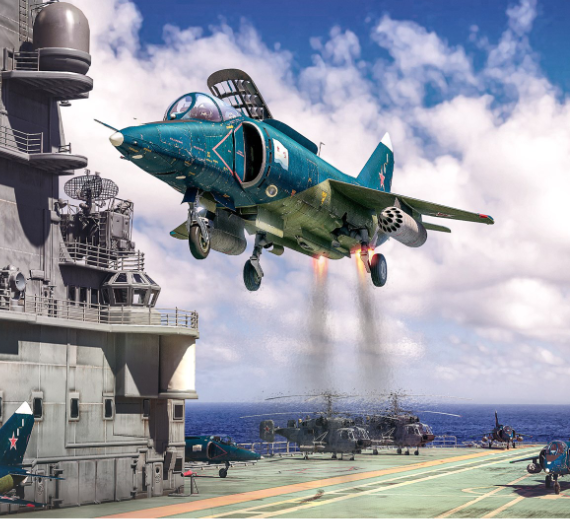
| A Soviet Navy Yak-38 landing aboard Novorossiysk | |
| Role | VTOL Fighter aircraft |
|---|---|
| National origin | Soviet Union |
| Manufacturer | Yakovlev |
| First flight | 15 January 1971 |
| Introduction | 11 August 1976 |
| Retired | 1991 |
| Status | Retired |
| Primary user | Soviet Naval Aviation |
| Produced | 1975–1981 |
| Number built | 231, including Yak-38U – 34Yak-38M – 52 |
.
History JSC A.S. Yakovlev Design Bureau
Yakovlev Yak-38
(NATO reporting name: "Forger")

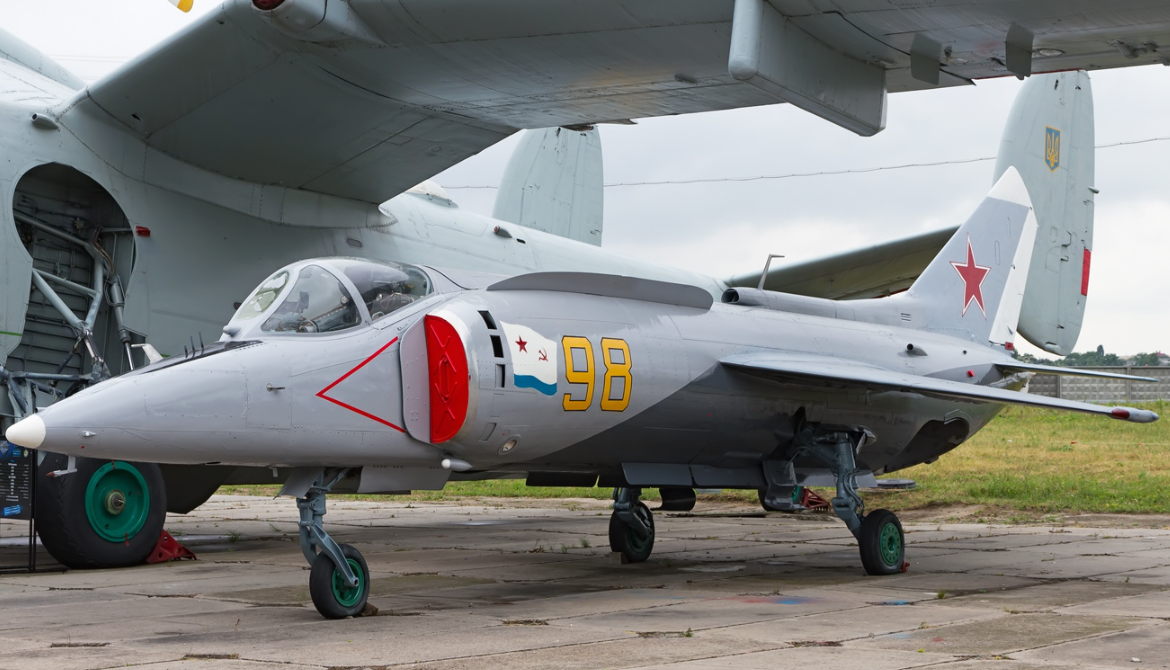
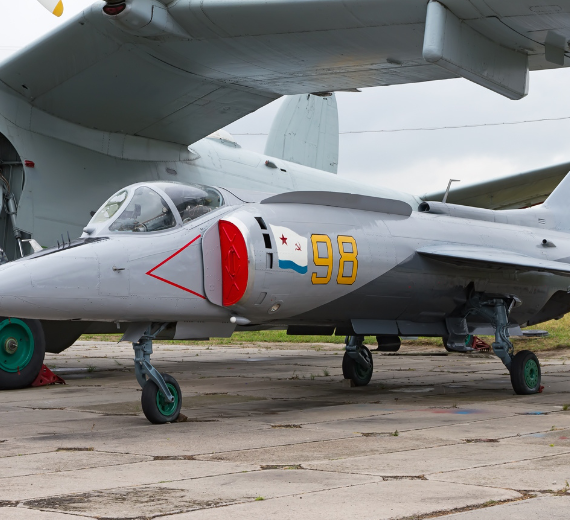
The Yakovlev Yak-38 (Russian: Яковлев Як-38; NATO reporting name: "Forger") was Soviet Naval Aviation's only operational VTOL strike fighter aircraft in addition to being its first operational carrier-based fixed-wing aircraft. It was developed specifically for, and served almost exclusively on, the Kiev-class aircraft carriers (heavy aviation cruiser in Russian classification).
Design and development
Origins


Designed by the A.S. Yakovlev Design Bureau, the first drawings showed a supersonic aircraft strongly resembling the Hawker P.1154 in study in the United Kingdom, but with two R27-300 engines. Supersonic performance would have implied many difficulties of development, and it was decided to initially develop a relatively simple aircraft limited to Mach 0.95. Although the Yak-38 and Yak-38M were developed from the land-based Yakovlev Yak-36, the aircraft had almost nothing in common.
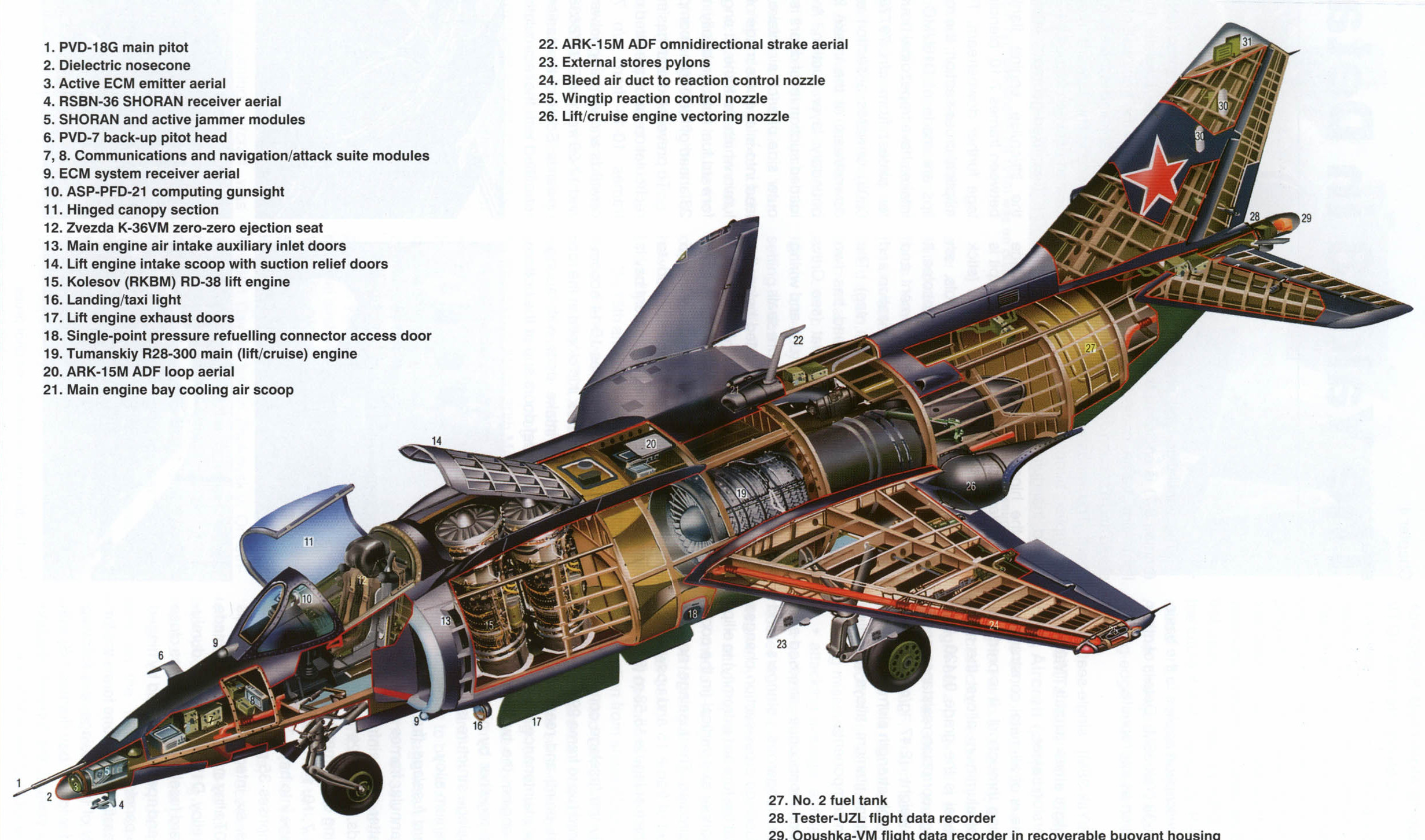
The prototype VM-01 was finished on 14 April 1970. Though outwardly similar to the British Hawker Siddeley Harrier, it followed a completely different configuration. Together with a vectorable thrust engine in the rear used during flight, two smaller, and less powerful, engines were housed in the front portion of the fuselage and used purely for takeoff and landing.
The Yak-38 had an automatic ejection seat. If one of the takeoff engines failed or the aircraft rolled past 60 degrees the pilot was automatically ejected from the aircraft.

0
KmCeiling
0
KmCombat RANGE
0
Km/hAircraft Speed
0
Max Crew
Photo Gallery
JSC A.S. Yakovlev Design Bureau Yak-38
(NATO reporting name: "Forger")
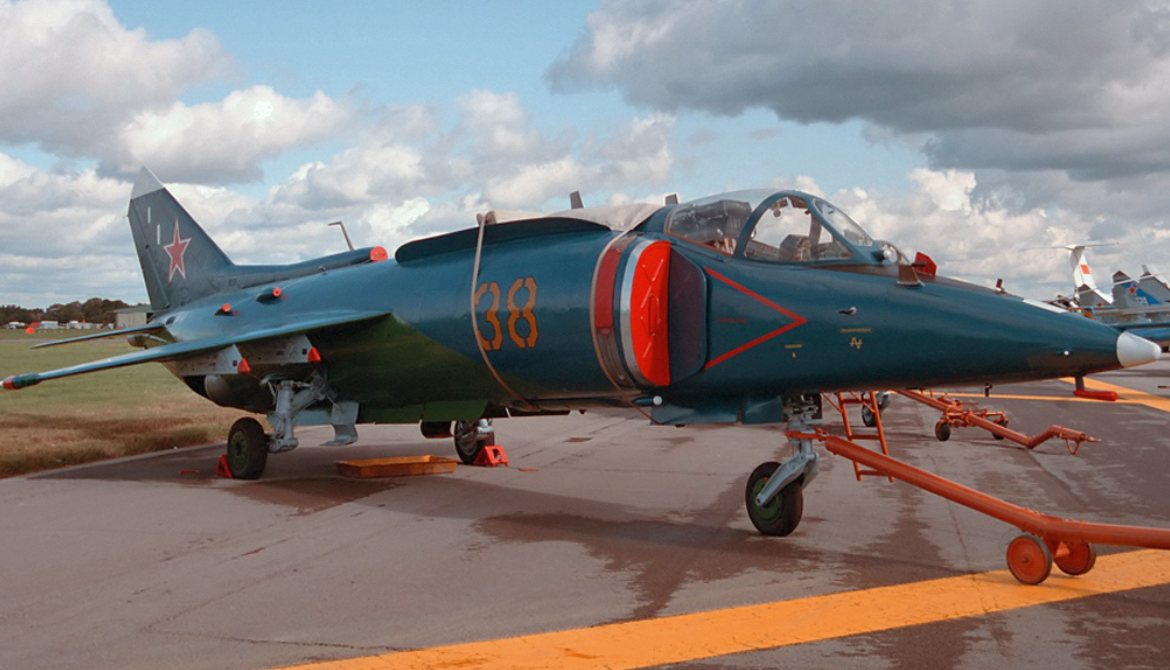

JSC A.S. Yakovlev Design Bureau
Yakovlev Yak-38
(NATO reporting name: "Forger")
General Info
-
-
-
- Crew: 1
- Length: 16.37 m (53 ft 8 in)
- Wingspan: 7.32 m (24 ft 0 in)
- Height: 4.25 m (13 ft 11 in)
-
-
Powerplant
-
-
-
- Empty weight: 7,385 kg (16,281 lb)
- Max takeoff weight: 11,300 kg (24,912 lb)
- Powerplant: 1 × Tumansky R-28 V-300 Vectored-thrust turbofan engine, 66.7 kN (15,000 lbf) thrust for lift and cruise thrust
- Powerplant: 2 × Rybinsk (RKBM) RD-38 turbojet engines, 31.9 kN (7,200 lbf) thrust each lift-jets
-
-
Performance
- Maximum speed: 1,280 km/h
- Range: 100 km (62 mi, 54 nmi)
- Service ceiling: 11,000 m
- Rate of climb: 75 m/s
Armament
-
- Guns: GSh-23L 23mm gun pod (GP-9). Carried in one or two pairs of UPK-23-250 pods fixed under the external pylons of wings.
- Hardpoints: 4 with a capacity of 2,000 kg (4,400 lb)
-
.
Links to Youtube & Others
In a maritime context, the Yak-38 was not limited to the decks of Kiev. In September 1983, AV-MF pilots operated from the civilian Ro-Ro vessel Agostinho Neto, and NII-VVS pilots conducted further tests from another Ro-Ro vessel, Nikolai Cherkasov. In both cases, use was made of a heat-resistant landing platform; further land-based trials tested the practicality of dispersed landing platforms, in a similar concept to the British Royal Air Force's Harrier operations in West Germany.

Yakovlev Yak-38 Forger
The initial pre-production version, differing slightly from the Yak-38. It weighed 6,650 kg (14,660 lb) compared to the Yak-38's 7,370 kg (16,250 lb) and the engines were slightly less powerful..
Youtube Link
The majority of Yak-36M initial production deliveries were to the 279 OKShAP (Otdelny Korabelny Shturmovoy Aviatsionny Polk, Independent Shipboard Attack Air Regiment), initially based at Saki, the AV-MF's training centre in Crimea.
Read more in JSC A.S. Yakovlev Design Bureau
Yakovlev Yak-38 Forger
.
.png)
.png)