
de Havilland Aircraft Company
de Havilland DH.89 Rapide
Manufactured 1934-1946
First flight 17 April 1934


de Havilland
DH.89 Rapide/Dragon
|
|||||||||||||||||||||
|---|---|---|---|---|---|---|---|---|---|---|---|---|---|---|---|---|---|---|---|---|---|

.
History de Havilland Aircraft Company
de Havilland DH.89 Rapide/Dragon
Manufactured 1934-1946
First flight 17 April 1934
The de Havilland DH.89 Dragon Rapide is a 1930s short-haul biplane airliner developed and produced by British aircraft company de Havilland. Capable of accommodating 6–8 passengers, it proved an economical and durable craft, despite its outdated plywood construction.
Developed during the early 1930s, the Dragon Rapide was essentially a smaller, twin-engined version of the four-engined DH.86 Express, and shared a number of common features, such as its tapered wings, streamlined fairings and Gipsy Six engines. First named the "Dragon Six", the type was marketed as "Dragon Rapide" and later simply known as the "Rapide". Upon its introduction in summer 1934, it proved to be a popular aircraft with airlines and private civil operators alike, attaining considerable foreign sales in addition to its domestic use.
Design
Design and development
.jpg)
During summer 1933, the de Havilland aircraft company commenced work upon an aircraft to meet an Australian requirement, producing a four-engined faster passenger aircraft capable of seating ten passengers, the DH.86 Dragon Express.[2] An important feature of the DH.86 was the newly developed and powerful Gipsy Six engine, a six-cylinder variant of the four cylinder Gipsy Major engine. The DH.86 would serve as the a key starting point for the later DH.8
Variants


- D.H.89
- Twin-engined light transport biplane. First production version.
- D.H.89A
- Improved version, fitted with a landing light in the nose, modified wing tips and cabin heating.
- D.H.89A Series 4
- D.H.89A aircraft converted to two de Havilland Gipsy Queen 2 piston engines, fitted with constant speed propellers
- .
0
KmCeiling
0
KmCombat RANGE
0
Km/hAircraft Speed
0
Max Crew
Photo Gallery
de Havilland Aircraft Company
de Havilland DH.89 Rapide
Manufactured 1934-1946
First flight 17 April 1934
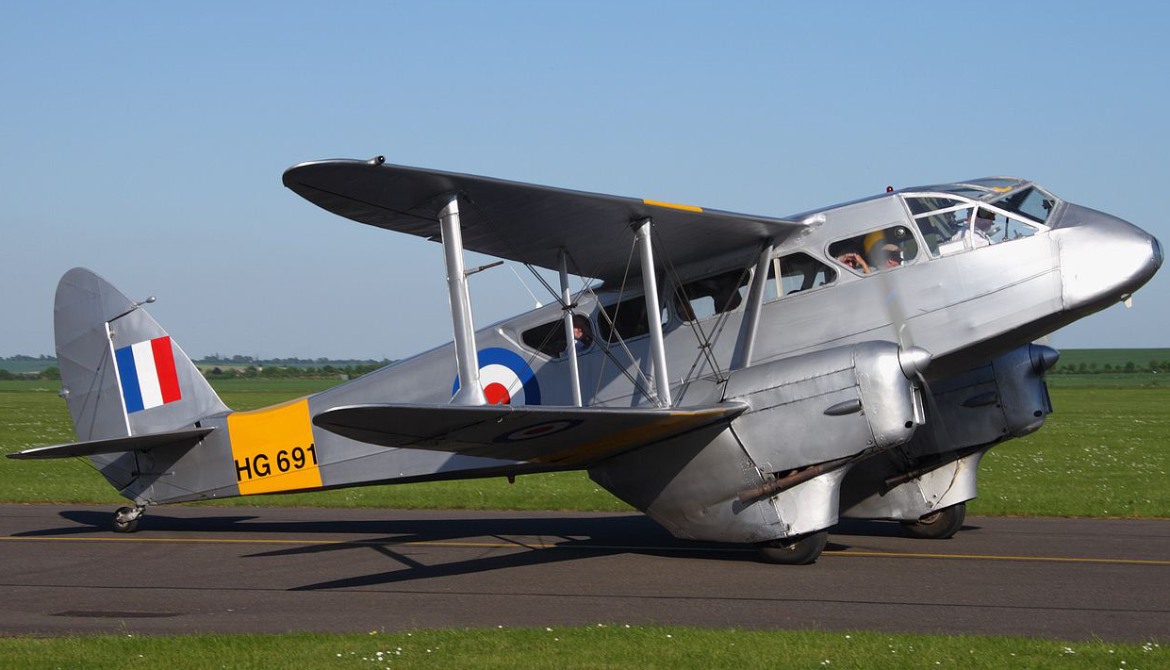



de Havilland Aircraft Company de Havilland DH.89 Rapide/Dragon Manufactured 1934–1946
General Info
-
-
- Crew: 1
- Capacity: 8 passengers
- Length: 34 ft 6 in (10.52 m)
- Wingspan: 48 ft 0 in (14.63 m)
- Height: 10 ft 3 in (3.12 m)
-
Powerplant
-
-
- Empty weight: 1,465 kg
- Gross weight: 2,495 kg
- Cabin dimensions (average):
-
- Cabin length: 13 ft 6 in (4.1 m)
- Cabin height: 4 ft 6 in (1.4 m)
- Cabin width: 4 ft 0 in (1.2 m)
- Powerplant: 2 × de Havilland Gipsy Six 6-cylinder air-cooled inverted in-line piston engines, 200 hp (150 kW) each
-

Performance
-
- Maximum speed: 157 mph (253 km/h, 136 kn) at 1,000 ft (305 m)
-
-
-
- (135 kn; 249 km/h) at sea level
-
-
- Cruise speed: (212 km/h, 115 kn)
- Range: (895 km, 483 nmi) in still-air at cruising speed
- Service ceiling: 16,700 ft (5,100 m)
-
-
-
- 3,100 ft (945 m) on one engine with full payload
-
-
Links to Youtube & Others
The prototype De Havilland Aircraft DH89 Dragon Six (E-4/CH-287) flew for the first time on 17th April 1934 and was essentially a twin engine, scaled down version of the 4 engine DH86 Express. Designed to carry 6 - 8 passengers, it became one of the most successful British built short-haul aircraft of the era and despite its primitive plywood construction, it proved to be extemely durable.

de Havilland
DH.89 Rapide
The type was immediately successful in both the home and export markets with a significant number of pre-war British operators.

Youtube Link
The de Havilland DH.89 Dragon Rapide was a 1930s short-haul biplane airliner developed and produced by British aircraft company de Havilland. Capable of accommodating 6–8 passengers
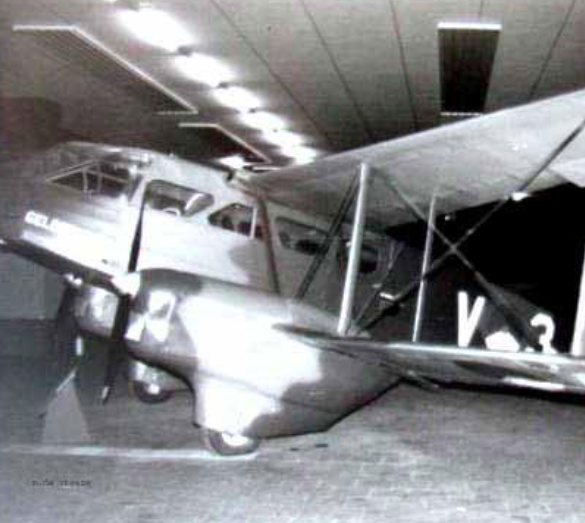
Read more in Hawker Siddeley Aircraft was a British aircraft manufacturer.


.svg.png)