Short Brothers
Short C Mk.1 Belfast
(nicknamed the "Belslow")
First flight 5 January 1964
Produced 1964–1968

Short Brothers plc.
Short C Mk.1 Belfast
 |
|
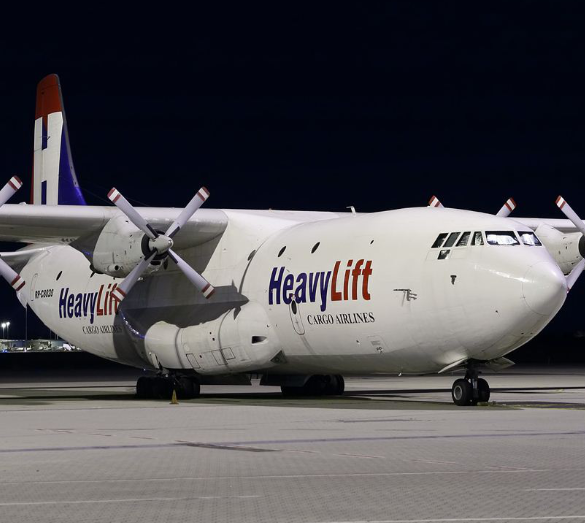
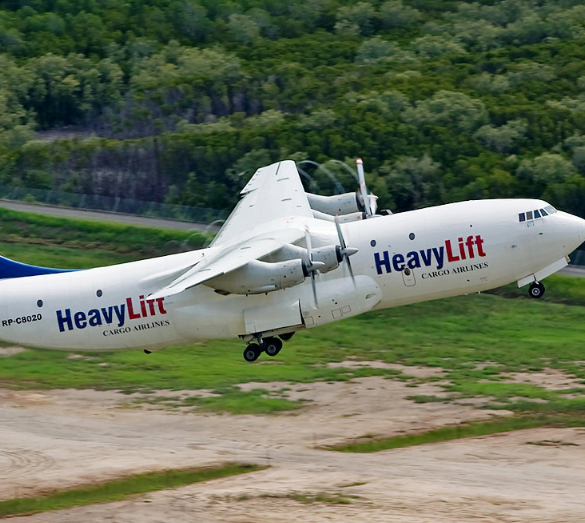
| Belfast of HeavyLift Cargo Airlines lands at Perth Airport (2004) | |
| Role | Heavy airfreighter |
|---|---|
| Manufacturer | Short Brothers |
| First flight | 5 January 1964 |
| Introduction | 20 January 1966 |
| Retired | from RAF service 1976 |
| Primary users | Royal Air Force HeavyLift Cargo Airlines[1] |
| Produced | 1964–1968 |
| Number built | 10 |
.
History Short Brothers plc,
Short C Mk.1 Belfast (nicknamed the "Belslow")
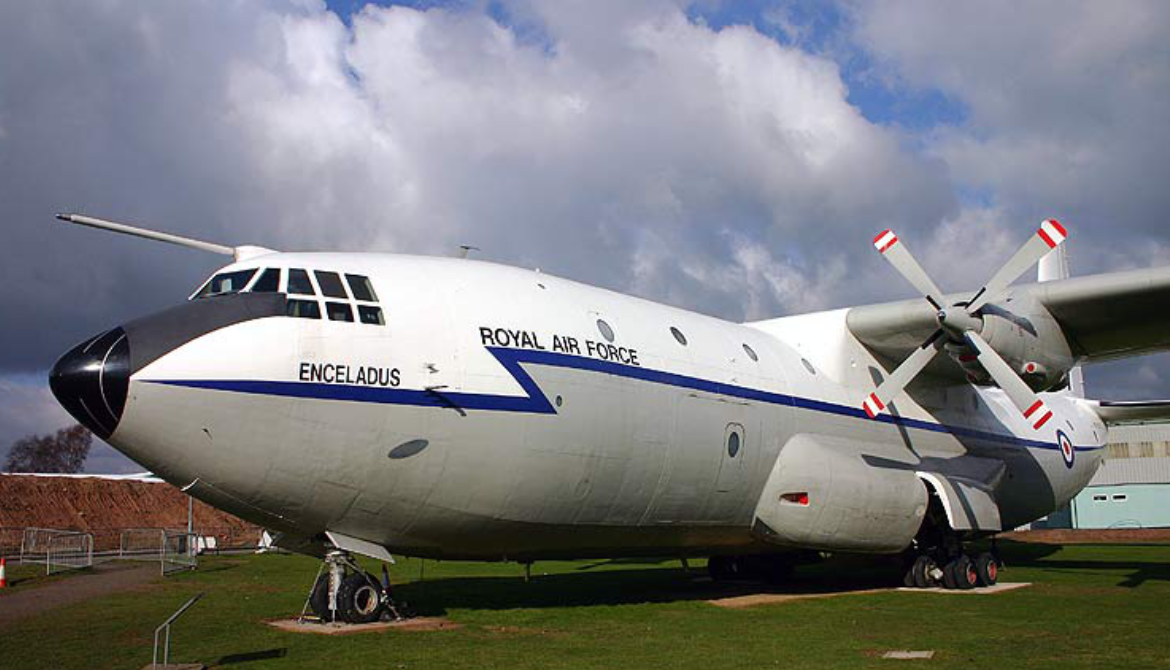
The Short Belfast (or Shorts Belfast)[2] is a heavy lift turboprop freighter that was built by British manufacturer Short Brothers at Belfast. Only 10 aircraft were constructed, all of which entered service with the Royal Air Force (RAF), who operated it under the designation Short Belfast C.1.
Upon its entry into service, the Belfast was the largest aircraft that the British military had ever operated up to that time. It was also notable for being the first aircraft to be designed from the onset to be equipped with full 'blind landing' automatic landing system equipment. Following the formation of RAF Strike Command and a reorganisation of transport assets, the RAF decided to retire all of its Belfast transports by the end of 1976.
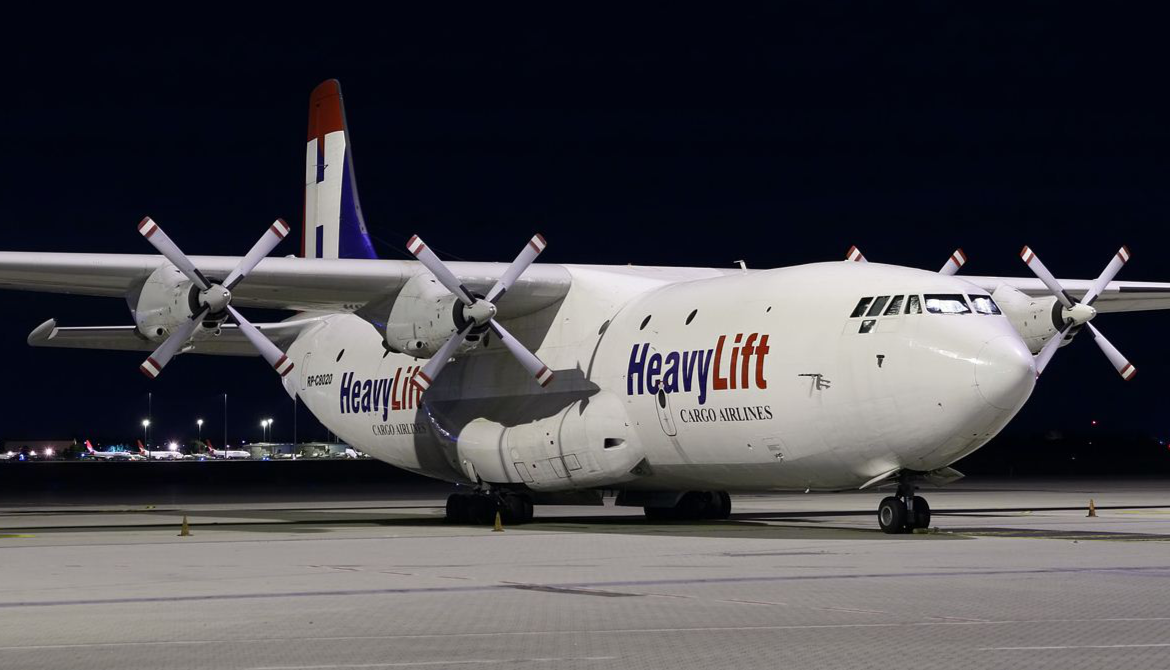
Shortly after the type had been retired by the RAF, five Belfasts were sold and placed into civilian service with the cargo airline TAC HeavyLift. These civilian aircraft were used for the charter transport of various goods, including to the RAF. One Belfast is on display at the RAF Museum Cosford. A Belfast formerly operated by Heavylift Cargo is lying abandoned at Cairns Airport in Australia and was the subject of a legal dispute for fees between the airport and the owner of the aircraft, Flying Tigers
Design overview
Design


The Short Belfast was a large heavy-lift strategic transport aircraft. It featured a high-mounted wing, which carried four Rolls-Royce Tyne turboprop engines. According to aerospace publication Flight International, the design of the assemblies of the surfaces of both the tail and wing of the Belfast had been derived from the Bristol Britannia.[One of the major changes to the wing was its conversion to a wet wing, which was performed by Canadair. There are few other common elements between the Belfast and the Britannia, although there had been a much greater proportion intended during initial designs for the aircraft.
The fuselage of the Belfast was a relatively conservatively stressed cylinder of a conventional design. It was developed with a target safe-life of 15,000 pressure cycles, which was fatigued tested using a complete fuselage immersed in a water tank. Fail-safe principles were used in the design of the large side door, rear ramp and door. Rolled Z-sections were used throughout the majority of the fuselage frames and stringers, while box beams are used where the exertion of heavier-than-average loads had been typically anticipated; the structure lacks any use of forgings or machined members.
0
KmCeiling
0
KmCombat RANGE
0
Km/hAircraft Speed
0
Max Crew
Photo Gallery
Short Brothers plc,
Short C Mk.1 Belfast (nicknamed the "Belslow")


General characteristics
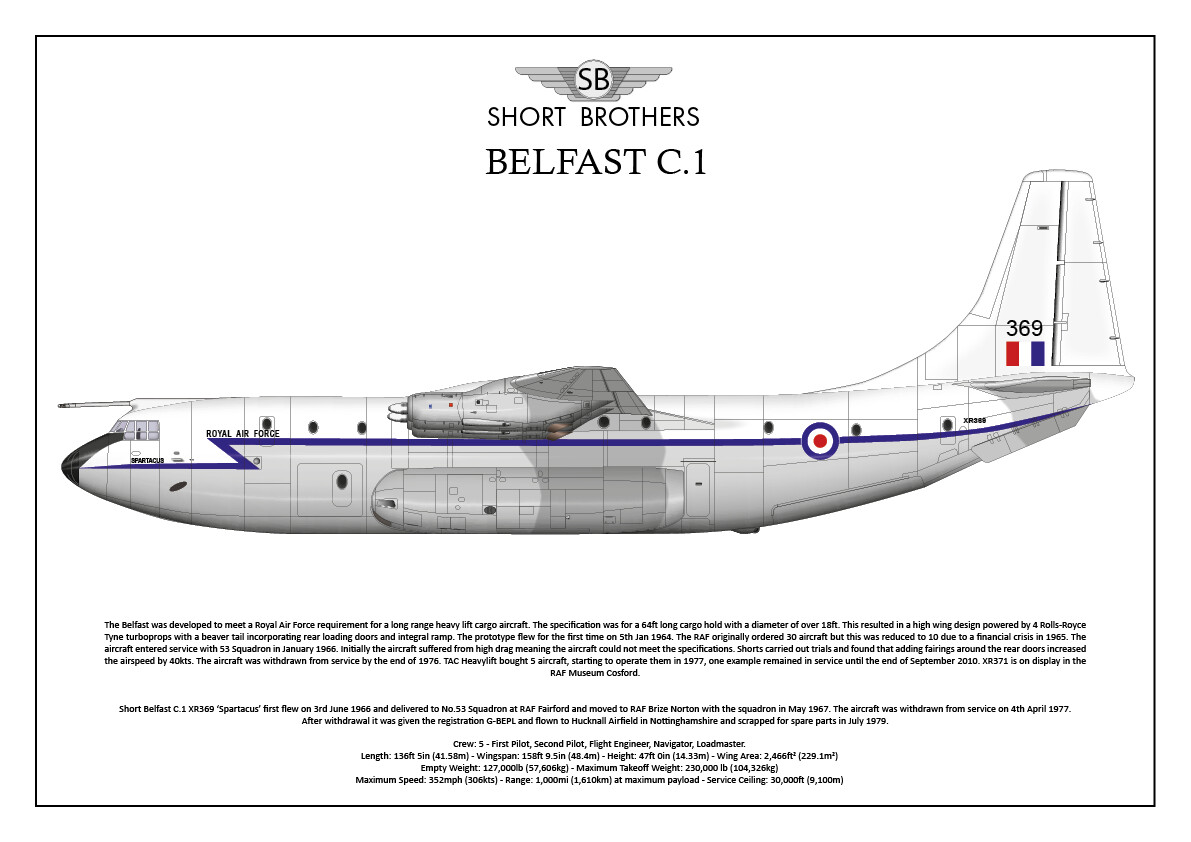
- Crew: 5 (two pilots, engineer, navigator and loadmaster)
- Capacity: 150 troops (250 with removable upper floor installed) (35,380 kg) payload
- Length: 136 ft 5 in (41.58 m)
- Wingspan: 158 ft 9.5 in (48.400 m)
- Height: 47 ft 0 in (14.33 m)
- Wing area: 2,466 sq ft (229.1 m2)
Powerplant
- Empty weight: (57,606 kg)
- Max takeoff weight: (104,326 kg)
- Powerplant: 4 × Rolls-Royce R.Ty.12 Tyne Mk.101 turboprop engines, 5,730 shp
- Propellers: 4-bladed Hawker Siddeley Dynamics 4/7000/6, 16 ft (4.9 m) diameter constant-speed fully feathering propellers
Specifications
- Maximum speed: 352 mph (567 km/h, 306 kn)
- Cruise speed: 336 mph (541 km/h, 292 kn) at 24,000 ft (7,315 m)
- Stall speed: 112 mph (180 km/h,
- Range: 1,000 mi (1,610 km, 870 nmi) with maximum payload
- Ferry range: 6,100 mi (9,800 km,
- Service ceiling: 30,000 ft (9,100 m)
.
Links to Youtube & Others
At the war's end BOAC obtained more Mark IIIs and gradually came up with better accommodation for its passengers, in three configurations. Bench seats were removed, and civil-standard seating installed.

Short Brothers
Short C Mk.1 Belfast
Sunderland T9044 was discovered on the seabed off Pembroke Dock in Wales in 2000.[51] The site is protected and recovery of the aircraft is ongoing
Youtube Link
The 990 did not meet the specifications promised, and American Airlines reduced its order as a result.
Read more in Short Brothers plc
.