
Britten-Norman (BN) British aircraft manufacturer
Norman BN-2A Mk III Trislander
First flight 11 September 1970


Britten-Norman (BN) BN-2A MKIII Trislander
|
|||||||||||||||||||||||||||
.jpg)
|
|
|---|
.
History Britten-Norman (BN) British aircraft manufacturer
Norman BN-2A Mk III Trislander
Manufactured 1970–1982
First flight 11 September 1970
The Britten-Norman Trislander (more formally designated the BN-2A Mk III Trislander) is a three-engined piston-powered utility aircraft designed and produced by the British aircraft manufacturer Britten-Norman.
The Trislander was designed in the late 1960s as an expanded derivative of the company's Islander, a twin-engined commercial aircraft that had proved to be a commercial success. In comparison to its predecessor, it had a larger carrying capacity, being capable of seating up to 18 passengers, and could also perform STOL operations when required.[1] On 11 September 1970, the prototype Trislander performed its maiden flight; the type entered revenue service less than a year later.
Design and development
During the 1960s, the British aircraft manufacturer Britten-Norman, founded by John Britten and Desmond Norman, had designed and commenced production of the Islander, a twin-engined commercial aircraft that quickly proved itself to be a commercial success. Being keen to capitalise on the Islander, the company's management opted to pursue development of a larger aircraft that would be derived from its predecessor as to benefit from commonalities and to lower development costs. In 1968, the company flew a stretched variant of the aircraft, known as the BN-2E Islander Super, however, this model was never pursued through to certification in favour of a more radical alternative design - the Trislander.
_-_Flickr_-_Ragnhild_%26_Neil_Crawford.jpg)
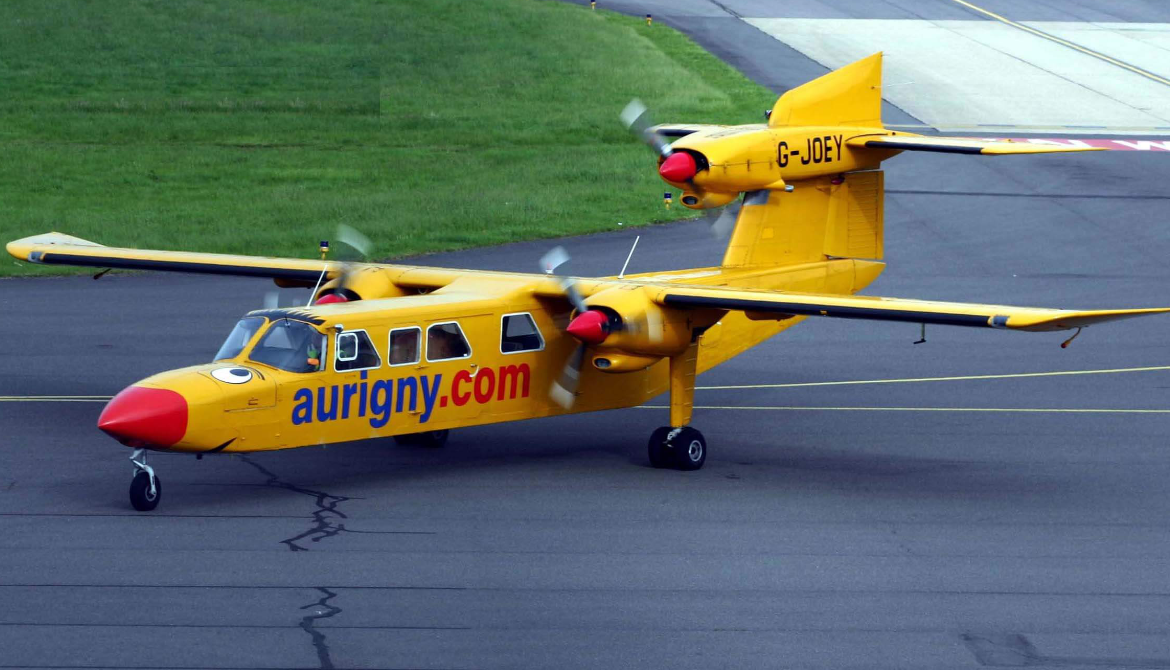
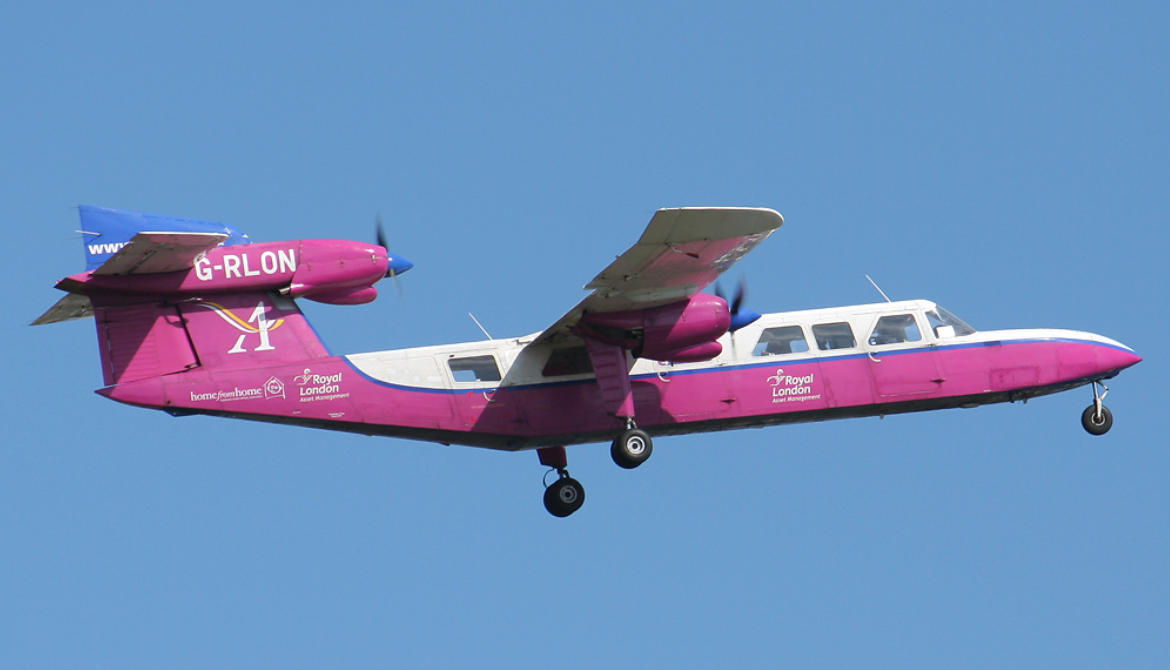
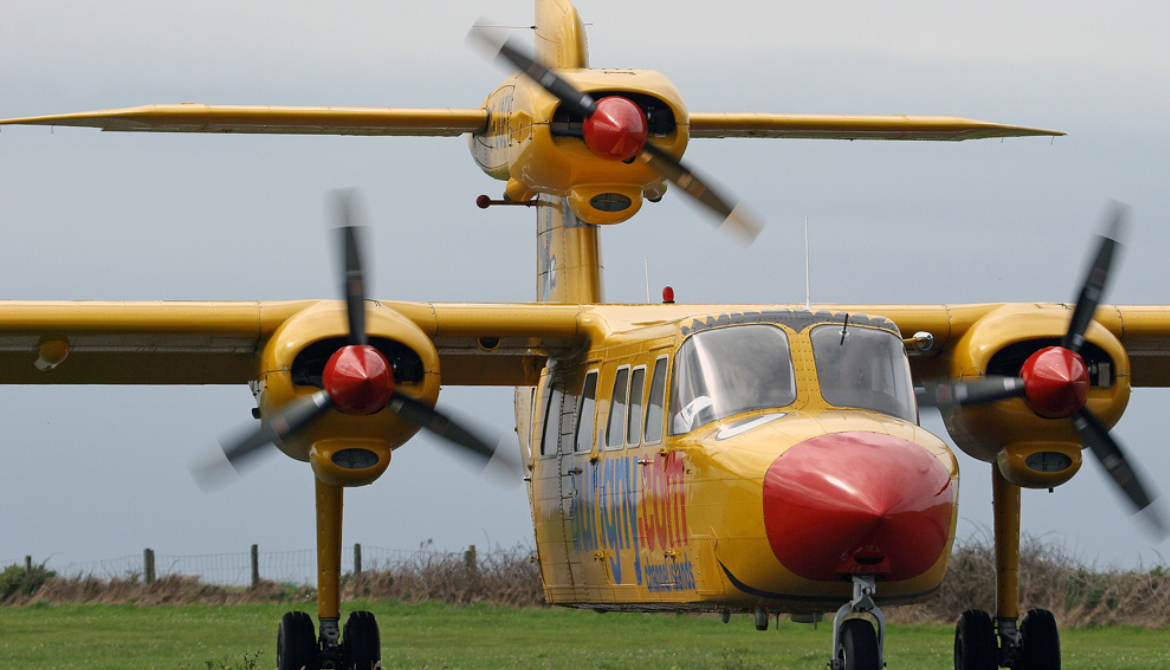
Seeking to give the aircraft a considerably larger carrying capacity, the Islander's fuselage was stretched and strengthened considerably for the Trislander, a measure that necessitated various configuration changes The most visually apparent of these was the addition of a third engine located on the fuselage centre line atop an elongated tailfin.[A fixed tricycle landing gear arrangement was also adopted. While possessing an unorthodox appearance, the arrangement proved practical; in terms of construction, the Trislander was similar enough to the Islander that the two aircraft shared the same final assembly line
0
KmCeiling
0
KmCombat RANGE
0
KM/hAircraft Speed
0
Max Crew
Photo Gallery
Britten-Norman (BN) British aircraft manufacturer Norman BN-2A Mk III Trislander
Manufactured 1970–1982 First flight 11 September 1970


Britten-Norman (BN) British aircraft manufacturer
Norman BN-2A Mk III Trislander
Manufactured 1970–1982 First flight 11 September 1970
General Info
-
-
-
- Crew: 1 or 2
- Capacity: 16 or 17 passengers
- Length: 49 ft 3 in (15.01 m)
- Wingspan: 53 ft 0 in (16.15 m)
- Height: 14 ft 2 in (4.32 m)
- Wing area: 337.0 sq ft (31.31 m2)
-
-
Powerplant
-
-
- Empty weight: 5,842 lb (2,650 kg)
- Max takeoff weight: 10,000 lb (4,536 kg)
- Fuel capacity: 154 imp gal (185 US gal; 700 L)
- Powerplant: 3 × Lycoming O-540-E4C5 air-cooled flat-six piston engines, 260 hp (190 kW) each
-

Performance
-
- Maximum speed: 180 mph (290 km/h, 160 kn) at sea level
- Cruise speed: 155 mph (249 km/h, 135 kn) (59% power) at 13,000 ft (4,000 m)
- Range: 1,000 mi (1,600 km, 870 nmi)
- Service ceiling: 13,160 ft (4,010 m)
Aircraft of comparable role, configuration
Links to Youtube & Others
n terms of its flying characteristics, the Trislander possesses exceptional low speed handling characteristics, extended endurance, increased payload, and a relatively low noise signature. Capable of taking off from a 150 metres (492 ft) long landing strip, the Trislander can readily operate from unprepared surfaces.

Britten-Norman (BN) BN-2A MKIII Trislander
During July 1971, the Trislander entered service with the Guernsey-based Aurigny

Youtube Link
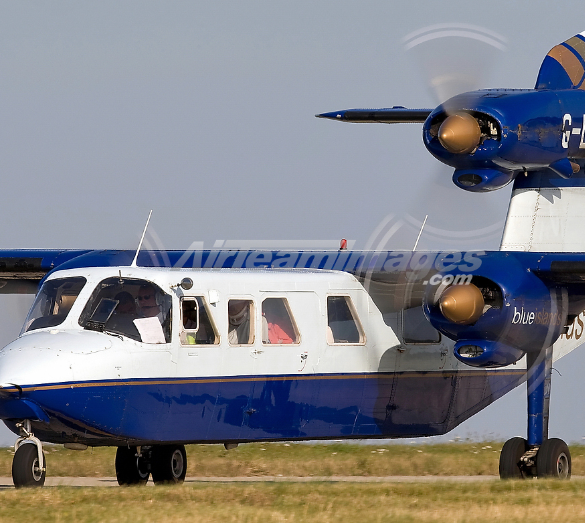
Into the 2020s, companies have continued to operate the Trislander; a number have been made available for private entities to hire
Read more in Britten Norman was a British aircraft manufacturer.



.svg.png)